Showing posts with label Obama. Show all posts

Tuesday, December 14, 2010

Clinton: "Don't worry Barry, I got it"


It was, to put it mildly, odd.

A sitting president calls in a former president to address a press gaggle at the White House. During this briefing the current president lets the whole world know that he's late for a Christmas party, so he heads out, leaving the press - and the country - in the hands of a former president.

After a few minutes, Obama seemed to conclude that he would be better served by being out of the picture than as a bystander. "I've been keeping the first lady waiting for about half an hour, so I'm going to take off," he said.
Clinton responded, "Well, I - I don't want to make her mad. Please go."

One of the results was the awful visual above - an image of a president turning away from the podium during time of war and recession - a picture just this side of abdication.

Whomever came up with the idea for this press conference ought to hand in their resignation post haste. It was unprofessional and decidedly presidential. Really, you're the president, the party isn't going to start without you and surrendering your podium and your presidential seal in your press room in your White House sends a terrible signal.

Ironically, the deal that Obama negotiated with congress to extend the Bush tax cuts while cutting payroll tax and providing a default stimulus could be an outstanding political coup for the administration.  


Monday, July 26, 2010

The Failed Presidency of Barack Obama, pt 2


The breaking wikileaks scandal has the possibility of becoming a true Katrina moment for Barack Obama, depending on how things shake out.

But as the early-viewing New York Times reports, WikiLeaks presents a new depth of detail about how the U.S. military has seen, for six years, the depths of ISI facilitation of the Afghan insurgency. For instance: a three-star Pakistani general active during the 80s-era U.S.-Pakistani-Saudi sponsorship of the anti-Soviet insurgency, Hamid Gul, allegedly met with insurgent leaders in South Waziristan in January 2009 to plot vengeance for the drone-inflicted death of an al-Qaeda operative. (Gul called it “absolute nonsense” to the Times reporters.)
Other reports, stretching back to 2004, offer chilling, granular detail about the Taliban’s return to potency after the U.S. and Afghan militias routed the religious-based movement in 2001. Some of them, as the Times notes, cast serious doubt on official U.S. and NATO accounts of how insurgents prosecute the war. Apparently, the insurgents have used “heat-seeking missiles against allied aircraft,” eerily reminiscent of the famous Stinger missiles that the U.S., Saudi Arabia and Pakistan provided to the mujahideen to down Soviet helicopters. One such missile downed a Chinook over Helmand in May 2007.

Typically, NATO accounts of copter downings are vague — and I’ve never seen one that cited the Taliban’s use of a guided missile. This clearly isn’t just Koran, Kalashnikov and laptop anymore. And someone is selling the insurgents these missiles, after all. That someone just might be slated to receive $7.5 billion of U.S. aid over the next five years.

If it comes out that the Obama administration has been a.) actively covering up Pakistani involvement or, b.) So incompetent as to have overlooked obvious Pakistani involvement, then these documents could have a real impact on the already weakened Obama administration.

Obama's post presidency is fast approaching, and the most important thing for him to do with that time is to plan to fail in Afghanistan. 

Tuesday, June 22, 2010

Mission Accomplished? Rethinking the strategic assumptions of the Bush Administration


Introduction:

Tom Barnett had a post last week that contrasted America's apparent post-surge success in Iraq with the rapidly deteriorating situation in Afghanistan.  Looking at the two situations begs an interesting question: was George W. Bush's "gut" instinct about the differences between Iraq and Afghanistan in 2002-03 correct?


Taking Our Eye off the Ball?

In his book Descent Into Chaos Pakistani-born journalist Ahmed Rashid lays out a pretty strong case that president Bush took his eyes off Afghanistan at a crucial point - mid 2002 - a point when, according to Rashid's sources in various NGOs, the United States had real opportunity to bring lasting peace to Afghanistan if only we had injected more troops/money/attention.

But the Bush administration had other ideas. By the middle of 2002 the U.S. was ramping up pressure on Saddam Hussein and plans were in place to take Hussein and his regime out. Critics of the Bush administration are fond of suggesting that this shift in focus, from south-central Asia to the Middle East was a major error, brought about by an irrational obsession with Hussein and "weapons of mass destruction".  This strategic blunder - so the story goes - wasted American lives in both Iraq and Afghanistan and directly contributed to the resurgence of the Taliban.

Charging the Mound

What I describe above is more or less conventional wisdom and there is every indication that even president Obama subscribes to this strategic analysis. But what if it is wrong? What if the Bush administration began to suspect the futility of dealing with Afghanistan sometime around the so-called "Airlift of Evil", that, assuming the U.S. had been ignorant of Pakistan's complicity with the Taliban, would have removed all doubt. So even in 2001 the U.S. was forced to deal with the fact that we were fighting an enemy - aka the Taliban - who had been functioning as a wholly owned subsidiary of our new best friend - Pakistan. Further, events between India and Pakistan across 2002 would have been a wake up call to anyone paying attention: this fight is not about the Taliban. This fight is about two nuclear armed South Asian states that house about 1/5th of humanity and over a quarter of a billion Muslims between them.

Once the Bush administration realized just how touchy the situation in Afghanistan was, and just how unlikely it was that anything resembling victory was even possible in Afghanistan, the administration began casting about for another project; something far less intractable, preferably in the Middle East proper (as the hijackers had been Sunni Arabs, not Pashtuns or Pakistanis). Iraq, which had been playing its cat and mouse games with the U.N. weapons inspectors for years provided as good a candidate for an experiment in "democratic peace theory" as anywhere else.

From that perspective then, Bush didn't "take his eye off the ball" - to continue the baseball analogy - he charged the mound. He changed the rules. "We can't win in Afghanistan because Pakistan won't let us? Fine, we'll go win somewhere else and Pakistan can reap what they sewed in Afghanistan."

The Lasting After Effects of Bush's Cynicism 

To say that the invasion of Iraq - and, by extension - the elevation of Iraq to a priority versus Afghanistan dose not excuse the Bush administration's behavior in the years that followed. There was absolutely no excuse for going into Iraq under staffed and under resourced or for telling the American people that Iraq would be a cake walk. In retrospect, I do regret my vote in 2004, because the gross incompetence of the first Bush administration should have earned him a one term presidency.

But both things can be true: Bush was a bad president; he was also right about Iraq versus Afghanistan in 2002. He was right that Afghanistan would turn out to be un-winnable. But the Rovian cynicism and political calculations required him to maintain a troop presence in Afghanistan and even as he was fighting a good fight to get the resources for the surge in Iraq he continued to add more troops to the Af-Pak theater and expand the war - via drones - into Pakistani territory. Bombing Pakistan makes sense. In fact, clearing the tubes on a couple of boomers into Islamabad probably would have been the best strategy on 9/12 2001, rather than getting ourselves sucked into the regional grudge match that is Afghanistan. But bombing Pakistan makes a lot more sense when we don't depend on them to get supplies to our troops and when we don't have troopers stationed close to the areas we are bombing - thus putting Americans within rifle range of pissed off villagers.

What Would George Bush (circa 2002) Do? 

The George Bush of 2002 felt that Afghanistan was best left to special forces, air strikes and former Northern Alliance warlords turned "governors". Before he was overtaken by event; overwhelmed by political opponents calling Afghanistan "the good war" versus Iraq as "the dumb war", before all of that happened George Bush had solid instincts about what was possible in south-central Asia versus what was possible in the heart of Sunni Arab world. Looking at the Middle East today we see economic growth in Jordon and Dubai; we see peace in Iraq and social reforms in Saudi Arabia. We see that the Bush of 2002 was more right than wrong.  

Thursday, June 10, 2010

The Failed Presidency of Barack Obama


I don't regret my vote.

Yet.

But it's becoming increasingly apparent that Barack Obama is racking up a record fit to be mocked by both Jimmy Carter and Lyndon Johnson. If Obama has decided that he will be a failed foreign policy president with a domestic "win" on his record - ala LBJ - well, so be it, but the least he could do would be to adopt a "first do no harm" approach to foreign policy by essentially doing nothing at all. Instead, Obama is actually making things worse.

On Iran 

Congratulations, 18+ months of begging cajoling diplomacy have earned a sanctions regime that is set up to become just as big a joke as the current sanctions regime which has been in place for many years.

Well, at least this new sanctions regime will stop Iran from acquiring modern anti-aircraft missiles from Russia, right?

Nope.

Conflicting statements from Russian officials on whether or not it will scrap the pending S-300 surface-to-air missile system sale to Iran because of new United Nations sanctions over Tehran’s continued pursuit of nuclear weapons. First, an “industry source” said the S-300 deal was off. Now, Russia’s Foreign Ministry says the sale is still on. Israel has stated publicly that the sale of S-300s to Iran is a red line that would prompt an Israeli military attack.

So, let's review. Obama has:

Not stopped Iran from getting the bomb.

Not stopped Iran from getting advanced Russian anti-aircraft missiles.

And probably not stopped Israel from wanting to attack Iran.

Great, mister president, that was an awesome use of 18 months and god knows how many face-to-face pathetic groveling sessions meetings with world leaders who have more important things to do.

But hey, at least Obama didn't alienate any allies in the process or anything:

Now, even as the U.N. Security Council prepares to impose its fourth round of sanctions on Iran with a vote slated for Wednesday, Tehran is demonstrating remarkable resilience, insulating some of its most crucial industries from U.S.-backed financial restrictions and building a formidable diplomatic network that should help it withstand some of the pressure from the West.
Iranian leaders are meeting politicians in world capitals from Tokyo to Brussels. They are also signing game-changing energy deals, increasing their economic self-sufficiency and even gaining seats on international bodies.
Iran's ability to navigate such a perilous diplomatic course, analysts say, reflects both Iranian savvy and U.S. shortcomings as up-and-coming global players attempt to challenge U.S. supremacy, and look to Iran as a useful instrument.
"We are very proud of our diplomacy, although we are mainly benefiting from mistakes made by the United States and its allies," said Kazem Jalali, a key member of the Iranian parliament's commission on national security and foreign policy. "We are using all our resources to exploit these weaknesses."

Ok, screw them anyway. It's not like the U.S. is committed to any sort of ongoing military operation where we might need allies or anything.

Except Afghanistan.

And Iraq.

And North Korea.. 

On Afghanistan

The COIN strategy appears to be faltering:

Government assassinations are nothing new as a Taliban tactic, but now the Taliban are taking aim at officials who are much more low-level, who often do not have the sort of bodyguards or other protection that top leaders do. Some of the victims have only the slimmest connections to the authorities. The most egregious example came Wednesday in Helmand Province, where according to Afghan officials the insurgents executed a 7-year-old boy as an informant.

Man, if we can't even protect friendly village and local leaders, what the hell are we still doing in Afghanistan?

Now, to be fair, Afghanistan is very complex situation and the Bush administration took its eye off the ball in Afghanistan before Barack Obama was even a senator. Still, Obama's plan to fail in Afghanistan remains overly Afghan centric, and at least some of that diplomatic energy wasted on those absolutely pointless Iran sanctions could have been used to find more partners to either help in Afghanistan or at least contain the worst exports from Pakistan's tribal regions.

A Set of Strategically Tone Deaf Priorities 

I've written that Obama has a nasty tendency to ask questions to which he should already know the answer. So far, his whole foreign policy has been based on asking for things that he should have known he was never going to get. For example, while he was considering how many more troops to send to Afghanistan, he was also haranguing China's president Hu about economic growth ManBearPig global warming rather than asking Hu to cooperate with U.S. efforts on Afghanistan. Because the Chinese are already nibbling around the edges of both peace building and investment in Afghanistan there was far more room for agreement on that issue as opposed to hoping they would sign on for "binding" limits on CO2 emissions.

You can take everything said above about China and replace China with India and its just as true.

Meanwhile, the U.S. continues to take a schizo-frantic approach to distinguishing between friends and enemies in the region. We bomb our "friends" while they support our enemies and while we continue to ramp up the tension with possible allies (see: Iran).

Then the KFR provokes and we are left dumbstruck, because Obama has been arguing with China and Russia about Iran (oh China, will you please poke your largest energy supplier with a large stick so we can stop a feit accompli in Iran's acquisition of a nuclear capacity?) rather than negotiating an end to the world's single greatest criminal enterprise - a country that actually has nuclear weapons and has shown no compunction what-so-ever about exporting to other rouge states.

Conclusion:Mad-Man Diplomacy, Dangerous Nations and Obama's Only Term

The problems that president Obama have are exasperated by several factors. He's backed himself into several rhetorical holes, on Iran and Afghanistan, for example, and so it will be hard for him to walk these situations back. Afghanistan will, unfortunately, end the same way Vietnam did, but with drones playing the role of off-shore balancer. Pakistan will be getting their backyard playground back and they will return to planning for their regularly scheduled war with India. Iran will go nuclear, and if they become angry/frightened enough they will shoot, just like other countries in the region have at moments of high tension.

And Obama will be returning to Chicago in 2013, despondent over his wasted potential. He won't be alone in his disappointment,  but he made his choices.   

With this in mind, the next president should adhere to a variant of Richard Nixon's Mad-Man Theory,except instead of trying to convince the world the U.S. would attack anybody at any time he or she should set out to convince the powers that be that the U.S. might normalize or break relations with various countries at any time. Specifically, the next president should find as many excuses to insinuate that he's prepared to break relations with Pakistan as possible. In a similar vein, he should be prepared to insinuate - and then follow through immediately - with normalization with Iran. Right now Russia Turkey and Pakistan enjoy all the fruits of both our strategic limitations and Iran's situation as an international pariah. Russia, Turkey and Pakistan want nothing more than an Iranian client state, stripped of all international connectivity and forced to conduct business through Russian/Turkish and Pakistani smugglers. These guys will be popping popcorn and laughing with glee as Israel destroys Iran's nuclear capacity - I'd not rule out Turkish, Pakistani and Russian complicity in such an attack, by the way - because it ensures an even weaker Iran position and greater levels of dependency upon its patrons.

But think of the alternative. Imagine a world where Turkey, Russia and Pakistan watch in horror as James Baker, Henry Kissinger and Bill Clinton step off a plane in Tehran and shake hands with A-Jad and his merry men. Yes, the Iranian leader (ship) is a thugocracy, but so was Mao and that didn't stop Nixon from securing a relationship with China, for similar strategic reasons. And the only thing that happened when Nixon went to China was that the Russians rushed to negotiate a series of arms control treaties, because they didn't want to be outbid by the Chinese. Oh, and a few things changes in China after that as well, or so I've heard.

Now, its important to realize that Iran is highly unlikely to negotiate away their nuclear stockpile, and we shouldn't ask that of them. It will be a lot more fun watching Russia and Pakistan figure out how to live with a nuclear Iran, and Turkey wants an excuse to get the bomb anyway, so we might as well embrace the future. Normalization between Iran and the U.S. will happen. It can happen now or it can happen after the next 9/11 or Mumbai when the the world comes together to dissolve Pakistan. Let's get proactive and maybe, just maybe, we can prevent the next 9/11.

In any case, the next president should make it a goal to come into office with as few international promises as possible. Leave global warming completely off the table and whatever you do don't wade into the morass that is Gaza and the West Bank. Stick to throwing strategic elbows - so to speak- by slapping down useless and dangerous allies like Pakistan and suddenly getting chummy with formerly blood enemies like Iran. And the day after the trip to Tehran, call China and let them know you'd love to talk to Kim. Tell him it will be two party talks. See if the possibility of the U.S. throwing the chess board into the air and openly negotiating with the KFR doesn't make China decide to hasten Kim's exit from this mortal coil (handle Iran first because negotiating with the KFR will bear no fruit, rack up a win before you go for something truly crazy).

America's fundamental strategic issue right now is stagnation and predictability. When GWB was president he tried to remind people that the U.S. can occasionally bob and weave with the best of them (see: Operation Iraqi Freedom) but his decisions have left his successor tied down in Afghanistan and Iraq. To make America again relevant is to make America again unpredictable, make us again Robert Kagan's Dangerous Nation.

Friday, May 21, 2010

Time for the PLA to Dissolve the KFR


It's official.

The ROK has confirmed that North Korea attacked and sunk a ROK naval vessel last March.

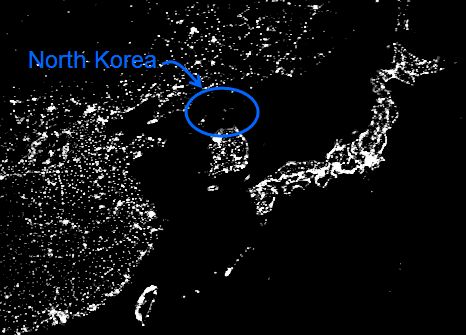
This act of aggression tops off years of increasingly abhorrent and belligerent behavior on the part of the KFR, including the kidnapping South Korean and Japanese citizens, detonating two nuclear weapons (although at least one was probably a fizzle), helping Syria build a nuclear reactor, being the worst regime in the world WRT proliferation of nuclear and ballistic missiles and attacking a South Korean vessel last fall. All of this in spite the KFR's udder lack of respect for their own citizen's well being and North Korea's continued existence only as a criminal enterprise - wholly owned by the Kim family- masquerading as a real state.

This attack should be viewed by the U.S., ROK and Japan as the last straw. For too long we've acquiesced in the face of intimidation from the KFR; each time reassuring ourselves that if we just give in, just this once, just give them a bit more aid or a bit more time the regime will surely collapse under the weight of its contradictions and North Korea can follow its ideological predecessors into the dust bin of history.

But this assessment appears, increasingly, to have overlooked key features of the North Korea state-religion known as Juche. Juche, as B.R. Myers agues in the book The Cleanest Race has more in common with late-era Japanese emperor worship than with more Europeanized versions of Marxist-Leninism or Chinese Maoism. This is an important point to consider, because the Japanese, when faced with the loss of their empire, did not engineer a peaceful "soft landing" but instead lashed out in a wave of suicidal violence more fitting to a the death a cult than to a nation-state. Eventually, Japan had to be beaten into submission, because their death cultish state-religion prevented them from accepting a less destructive alternative.

With this in mind, and given the KFR's recent behavior, it stands to reason that eventually North Korea will choose to go down swinging, rather than negotiate a peaceful end to the regime. The main question that remains is how to tell the difference between North Korea's normal, brutish behavior and beginning of the end of the KFR? Given that Kim is in poor health, that North Korea's economy very nearly collapsed last year and that there is a likely a battle brewing over who will take the reigns once Kim is gone, I think its a good bet that we should consider this latest escalation an indication that the end of days for the KFR has begun.

Apocalypse! Nowish

So what should we do? Should we join China in postponing the inevitable by propping up the regime with food and fuel oil? Or should we take direct action against North Korea's military, hoping that a defeat of North Korea's army allows us to undertake an OIF style "regime change?" Alternately, how do we pressure China to take a greater interest in restraining or even dissolving the KFR?

A direct military strike should be a last resort. The KFR is China's version of Frankenstein's monster, and they should bear the brunt of both blood and treasure lost in its eventual disposal. Having said that, China should get to dictate peace terms. They get to pick the next generation of North Korean leadership and design the new North Korean political system. The ROK and the U.S. should publicly proclaim that reunification is a goal for the distant future, and not something that must be set in stone at the dawning of any post KFR end state. It is reasonable for China to want to mitigate the risk of humanitarian crisis on their border by maintaining some semblance of order in North Korea and it is in the interest of the whole world for North Korea's weapons systems to be peacefully secured and disassembled rather than be looted by hungry peasants - or, worse - greedy former DPRK officers seeking a "severance package".

China's takeover of the DPRK could take any form, but I'd give preference to a Romanian style "Ceausescu" scenario whereby the DPRK military disposes of the KFR and then surrenders the country whole to the PLA in exchange for cash settlements for high ranking officers and whatever immunity deals may be appropriate vis-a-vis Japanese, South Korean, Chinese, American and ICC legal systems. China would then be free to mine the DPRK for all the natural resources it can grab while slowly opening the DMZ to allow controlled visitation and eventual immigration into the South. Call it "humanitarian reunification"; allow families to reunite and eventually allow cross border travel while fire-walling the political and economic systems of the South off from the worst after effects of an extremely messy and expensive full on political reunification. Over 1 or 2 generation the people of the former DPRK will have to make their own decisions WRT independence, reunification or some sort of quasi-union with China.

Unfortunately, it seems China wishes to maintain the status quo for the time being. Like the scene in Goodfellas where Tommy and Henry "bust the joint out" (h/t Tom Barnett), China seems to plan on using their proxies in the DPRK to keep the people in check while the PRC carts away everything that isn't nailed down. If they're sending food and cell phones to the people it's not the worst deal ever, but if North Korea becomes a defacto colony of the PRC then China will have to take full responsibility for the actions of the DPRK's military.  That means they owe the ROK an apology and monetary damages to the families of the sailors killed. If China ins't in control of the DPRK's military, then they better take control, and that is why a PLA sponsored coup is the best solution for everyone.

So what if China refuses? China seems less than enthusiastic when it comes to dealing with reality on the ground in the DPRK, as though if they just keep wishing maybe the KFR will morph into Deng Xiaoping. This is unlikely. As I said above, Juche is militant state-religion cum death-cult, and I don't see a true soft landing for the KFR in the offing. So the choice comes down to what type of "hard" landing the powers that be (U.S., PRC, ROK, Japan) desire. Do we want to bide our time, waiting for the other shoe to drop - possibly on Seoul, Beijing and Japan - or do we want to conduct a "controlled burn", so-to-speak, collapsing the KFR at the time, place and pace of our choosing, allowing the world the opportunity to prepare before D-Day?

Secretary Clinton is in China this week, and whatever else is on the agenda should be pushed aside so that she and her Chinese counterparts can focus on a single question:What is to become of the DPRK? Clinton should begin by handing Hu a map of the DPRK and a pencil and asking him to draw a line to indicate how much of a "buffer state" China would ultimately like to keep  between themselves and the South. This meeting has one rule: whatever Hu asks for he gets, period. If he wants to keep the 38th, fine. If he wants to move the border far north to some small rump-state DPRK, well, that's ok too. As long as Hu is ready to pull the plug on the DPRK's military, he gets what he wants.

And if Hu says no, the U.S. should be prepared to really turn up the heat on the both the DPRK and the PRC. Hillary should be prepared to tell Hu that we're prepared to lose Seoul to collapse this regime, and that in two weeks the U.S. Navy will begin regular exercises just outside DPRK territorial waters. She should be able to tell him that we're re-listing the DPRK as a state sponsor of terrorism and ending all humanitarian assistance to people of the DPRK, save a daily messages blasted, in Korean, from south of the border letting the North Korean people know that if they rise up to overthrow their government we will support them. Clinton should warn the PRC that the U.S. will be getting very aggressive with our exercises, pressing closer and closer to DPRK territory each day and that the president will be giving a public address in two weeks where he offers full American assistance to any DPRK general who participates in a coup against the regime. The U.S. should also dump counterfeit North Korean currency into their economy anyway we can. These are all things the U.S. can do, by ourselves, and should do if China refuses to play ball.

Beyond unilateral action, the time has come for Japan to make one of their periodic cryptic statements about their nuclear program. Only this time, they should do it with defense ministers from South Korea and Australia present. And it should be followed by all three countries formally stating their intentions to withdraw from the NPT and conduct a joint test of a prototype nuclear weapon in the Australian outback if the KFR is still in power in 12 months.

This leaves China with two choices, take the DPRK down - and set up a situation where the PRC still gets to profit - or let the chips fall where they may and see what those crazy Americans do. If the DPRK decides to blow itself out in a blaze of glory, China is likely to suffer as much as anyone. Large Chinese cities, probably including Beijing, are almost certainly in range for North Korean missiles, and both Japan and South Korea are protected by sophisticated ABM systems, whereas Beijing is a fairly soft target. Even if somebody takes out the KFR's ability to launch missiles, China will surely face a massive influx refugees, some of whom may be KFR special forces on a suicide missions.

Collapsing the KFR is one of those global public goods that would benefit the whole world for decades to come. I've predicted that collapsing the KFR could make Clinton the best SECSTATE since Kissinger and Obama the best foreign policy president since Richard Nixon. Doing it the right way, on positive terms, would not only bolster Obama and Clinton's legacy but could also be remember as the moment when China stood up to take a responsible position on regional security. This historic mission is cause worth undertaking.

Saturday, April 17, 2010

Planning to Fail in Afghanistan, pt 3


Mobile Blogging from here.


"I've seen the future, and it is murder."

--- Lenord Cohen

Is this story just another piece of idiot journalism from the NYT, or what?

I read this piece and I'm filled with a sense of both dejavu and a deep and unabiding sense of fear and loathing.

Suppose Obama is, indeed, planning to fail in Afghanistan. After he begins the pullout, then what? Does he go before the American people and just embrace defeat? After reading this article, reading Obama's nuclear posture review and seeing his circle jerk - er, "Nuclear Security Conference" - last week I'm wondering if there isn't an incredibly dumb yet surprsingly cohesive strategy in the whole thing: Barack Obama is going to win reelection by bombing Iran.

Sounds crazy, right?

But consider that perhaps things have not really gotten much better in Afghanistan. Consider that Obama has basically acquiesced to ISI/Taliban control of everything outside of Kabul. Consider that Obama then will be branded as mister "cut and run" by his opponent in 2012. Consider that Rambo is telling Obama that he's going to have to "triangulate" by getting tough on something and Iran is an easy target.

The more I think about it, the more sense bombing Iran probably makes to the increasingly vainglorious and strategicly tone- deaf crew we have running the policy shop at 1600 Pennsylvania Ave right now. The target package is fairly straight forward, and with a combination if cruise missile and B2 strike, coupled with a lingering campaign conducted via drones, a war against Iran must look like quit a splendid little war that we are certain to win- or at least end- in a really short time horizon.

Of course by losing Afghanistan and bombing Iran Obama will have completely erased all strategic rationale for his presidency. We will be no better off than if McCain/Palin had won and Obama's entire first/last term will have been a complete waist.

And the American people won't fall for it. Iran will squeeze whatever assets we have left in Afghanistan and Iraq and they'll do everything they can to escalate the adiministration into some kind of naval confrontation in the Gulf. It'll become clear pretty quickly that the attack achieved nothing and will probably hasten Iran's desire for a quick shoot just to prove that they still have a nuclear capacity.

And then Romney is going to have one hell of a mess on his hands January 21st, 2013.

Monday, February 8, 2010

Me Run? You Betcha!


 H/T: Andrew Sullivan used this video when live blogging Palin - and I find it fitting as well. As an aside, this actress is too old to be Evita, as was Madonna. 25-26 max. I'd love to see Lea Michel or Jessica Lee Golden as Evita. But I'm way off topic....

Palin. Sarah. Barracuda. 

Yeah.

"I think that it would be absurd to not consider what it is that I can potentially do to help our country," Palin said, later adding: "I won't close the door that perhaps could be open for me in the future."

I don't like it and I don't want it to happen. She's scary. She does not understand the gravity of the presidency.

Like her interview with Charlie Gibson, her views on foreign policy are just plain scary. "We win, they lose" or something.

I went to high school with Sarah Palin. Not Palin, per se, but a bunch of people who were just as dumb and just certain they were right. Fortunately for the world, most people that dumb and certain are swallowed whole by the mid-west or some small town in Alaska before they can do any real damage. Unfortunately, the McCain team was irresponsible enough to elevate this dangerous and unserious woman to a position where she could potentially do real damage.

From Sullivan: 

Do not under-estimate the appeal of a beautiful, big breasted, divinely chosen warrior-mother as a military leader in a global religious war. Bush at least had some inkling that we need a strategy to depolarize the Muslim world and bring moderates along with us to defeat the Islamists; in my view, he genuinely believed that what happened at Abu Ghraib was wrong but couldn't break down his denial that he had authorized almost all of it (she wants more of it); his Washington Cathedral speech reflected statesmanship (Palin wants brazen projection of hard power everywhere and her election as president would represent a true crisis in any alliances that Obama has been able to rebuild).

If Palin can navigate the primary process - and if unemployment remains high - the White House is hers. The press will empower the Junta from Alaska - just as they acted as accessories after-the-fact to John Edwards pathetic charade for nearly half a decade - before they turn on her midway through her first term. By then she'll have launch codes. And if the description of Palin from Game Change is to be believed - and no credible source has yet to disputed Heilemann and Halperin's scenes - then Palin is more then just a dilettante - she is quit possibly mentally unstable.

Palin did not understand WWI, WWII, the existence of two Koreas or even the name of her opponent in the vice presidential debate. Uninformed dose not begin to describe Palin.

She was prone to bouts of depression that left her near catatonic. She worried incessantly about her approval ratings in Alaska even as she was in the race of the lifetime that would have put her a heart beat away from the presidency. 

And then there's the weird story of her pregnancy - or - lack thereof? - with her youngest son. From today's Daily Dish:

Since I long ago committed to publishing any evidence I could find related to Palin's remarkable pregnancy stories (she steadfastly refuses to provide any), I post it below:
1192
What dose this mean? Was Palin not pregnant? Not really in labor? This is just odd.

What I will say conclusively is this: Palin is a dangerous person. I fully support any T.V. network paying her as much money as possible so as to dissuade her from quiting her day job and running for president, but I fear this woman will have to be dragged from the national stage leaving claw marks all the way.

Hopefully, unemployment falls precipitously throughout the next two years and Obama will be virtually guaranteed a 2nd term. For whatever misgivings I have about the president - especially his penchant for not holding underlings accountable for failure - President Obama remains head and shoulders above Sarah Palin in terms of judgment and temperament. I wish the president a successful 2nd year. 


Sunday, January 10, 2010

Stumbling Towards Bush 4.0 Territory

Looking back, president Bush went through three distinct iterations during his two terms in the White House.

Bush 1.0 (1998-September 10th, 2001) During this phase Bush was the "compassionate conservative", successful and popular governor of Texas and a man who knew that there were republican solutions to traditionally Democratic issues such as education.

Bush 2.0 (9/11 2001 - April 2004) This is the version that got up on pile of ruble in the days following 9/11 and promised a group of workers at ground zero that "the people who knocked these buildings down will hear all of us soon." It was this notion of Bush as the warrior, the protector, that led directly to his reelection in November in 2004. However, by November of '04 the creation of the third version of Bush had already begun.

Bush 3.0 (April of 2004-1/09) In April of 2004 Rumsfeld offered Bush his resignation because of gross abuses of Iraqi POWs. Bush refused to accept the resignation. This is the president Bush that is most remembered today; the man who let events get the better of him. The high - or low - point of Bush 3.0 was his "heckuva job Brownie" moment in the days following Hurricane Katrina.

And so it came to pass in November of 2008 then senator Barack Obama was elected to bring change. Throughout his campaign, Obama promised repair the damage done by the Bush administration and restore transparency and accountability to government.

But that was Obama .07, the public beta released for testing before all the bugs had been ironed out.

The first official release of Obama 1.0 has thus far proved buggy and has often been corrupted by errant files left over from the previous software (Bush 3.0). And on Christmas day, 2009, the Obama OS suffered its first full-scale kernel panic requiring a complete reboot. So far, the administration has decided to release a patch, which is designed to correct the security flaw in Obama 1.0 and update the system to Obama 1.01. Unfortunately, this may not be enough to really correct the security flaws:

Everyone who read the name "Umar Farouk Abdulmutallab" prior to December 25, 2009 should be reprimanded and fired.

The White House findings state that, "Mr. Abdulmutallab possessed a U.S. visa, but this fact was not correlated with the concerns of Mr. Abdulmutallab's father about Mr. Abdulmutallab's potential radicalization." It's an embarrassing sentence of bureaucratese in its own right, but more so when considered in context. The State Department didn't revoke Abdulmutallab's visa because an office clerk misspelled his name in a database.

Has no one in the intelligence community ever used Google? When "Abdulmutalab" was typed in, did the computer not ask, "Did you mean 'Abdulmutallab'?"

Another admission that crosses the threshold of bewildering into the realm of criminally negligent: the National Counterterrorism Center has a database of all known and suspected international terrorists. Umar Farouk Abdulmutallab was added to that database.

But that database does not feed directly into the TSA No-Fly List.

Who more than known terrorists belong on the No-Fly List? There should be no human involvement required here. One line of SQL database code could have averted disaster.

According to the White House, when the CIA and NCTC got the name of a radicalized militant from the militant's own father, and a warning that he was planning an attack, they did not search "all available databases to uncover additional derogatory information." How many databases are there? And how many terrorist databases must one appear in before he or she is considered a threat to U.S. national security?

This wasn't a ticking time bomb situation involving a lone wolf under the radar. Such a terrorist will succeed, and there's nothing we can do about it, aside from remaining vigilant. But the United States already knew about Abdulmutallab, and learned of his intentions on November 18th -- a month before he struck.

Most grating in the White House report is the repeated notion that Abdulmutallab's plot failed. It didn't. Nine years after 9/11, and after billions of spent dollars in needless security, confiscated fingernail clippers, and dumped breast milk, he succeeded in smuggling explosives onto an airliner destined for American soil. He succeeded in igniting the explosive. If not for dumb luck involving bad chemistry and a brave Dutch film director, there might today be a smoldering crater in Detroit.

Worse, there are a number of indications that the Bush 3.0 software, which was supposedly deleted, may be coming back:

After the attack, President Obama remained in Hawaii and enjoyed a Christmas vacation on the golf course. After the attack, National Counterterrorism Center director Michael Leiter took a six-day skiing holiday. After the attack, CIA director Leon Panetta remained in beautiful Monterey, California. The nation, the administration claims, can be governed from afar, and that's probably true. But when terrorists attempt a major strike on U.S. soil, isn't it a good idea to have someone in the White House situation room above the rank of janitor?
This tells me that Obama 1.0 - now 1.01 - is treading dangerously close to becoming Bush 4.0. And all it takes in one successful attack inside the U.S. and I have no doubt that the house and senate will pursue there own method of deleting the corrupt software, which will be very divisive and dramatic for the whole country. 

Thursday, January 7, 2010

A Step in the Right Direction

I applaud the president for taking responsibility for the Christmas Day Attack -aka The Boxer Rebellion (he he) - but I fear his proposed changes, absent the ending of a career or two, will simply create more paper shuffling and CYA mentality:

The government will strengthen criteria for putting people on no-fly lists barring them from U.S. aircraft. Authorities will comb databases of people suspected of ties to terrorist organizations and determine whether any of them have U.S. visas. The man accused in the Christmas airliner attack, Nigerian national Umar Farouk Abdulmutallab, had a visa, even though he had recently been added to a government watchlist.

What was the point of the terror watch list? I heard recently that there might be 500,000 names on the government's terror watch list. 500k isn't a "watch list", its like 50 divisions. If Al Qadea had 500k people they would attempt a conventional combined arms invasion of Egypt, not send some goon to blow up his pants on an airplane.

What I really want is a system to stop somebody from getting on a plane - not a scanner - not a series of questions, but a system whereby a CIA station chief receives a tip - say the name of a foreign national who is reasonably suspected of receiving training in martyrdom operations - and he can quickly - within maybe 1 or two minutes, tops, put out an APB to every entry point to not let someone with the following name, nationality, etc, cross. The technology required to do this is a very sophisticated and expensive piece of technology known as Gmail.

But the level of cooperation between the CIA, DOS and DHS is probably not possible, and the  devolution of authority into the hands of lowly CIA station chiefs (not really a lowly position, but in the mind of some deputy COS in D.C. they are) would cause fits back at both Langley and Foggy Bottom but I believe it is an aspirational goal.

Also, why is a person who is banned from England allowed to enter the U.S.? Anyone barred from entering either the U.K. or E.U. should undergo a extra layer of scrutiny before being allowed entry into the U.S.

Wednesday, January 6, 2010

Madame Secretary, resign pt. 2

Perhaps I was a bit hasty when I called for the resignation of the secretary of DHS.

Thinking back, I now wish I had called for the resignation of the director and all deputy directors of the CIA as well whomever is directly in charge of the foreign service.

And the secretary of DHS.

Here is why:

ABC ferreted out the truth behind news reports that Umar Abdulmutallab's father alerted the U.S. Embassy about his concern that his son had gotten involved with radicals. The way such reports were worded conveyed the idea that the CIA didn't have a smoking gun to work with. Actually, the CIA had a smoking cannon handed to them.

ABC learned that what really happened is that Umar phoned his father to say he was calling for the last time because the people he was with in Yemen were going to destroy his SIM card. That would make his phone unusable. And that was as much telling his father he was entering the final phase of training for a terrorist suicide mission.

His father immediately alerted Nigerian intelligence officials that he was afraid his son was preparing for a terrorist mission in Yemen. The officials then brought him directly into the presence of the CIA station chief in Abuja on November 19.

So it's not as if some worried father wandered in off the street to unburden himself to a clerk at a U.S. embassy. And note that the Nigerian intelligence officials didn't run the risk of getting trapped in voice mail hell or hearing, 'I'm sorry your email got lost in the shuffle.' They made Double Dutch sure the station chief heard the father's statement and understood its import and urgency.

What happened after the station chief took in the father's account? Report, file, and forget:
The next day the embassy sent out a thin report to U.S. embassies around the world warning Adbulmutallab may be associating with extremists in Yemen. The CIA official compiled two more robust reports following the meeting with the suspect's father. One was sent back to CIA's Langley, VA [headquarters]; the other remained in draft form in Nigeria and was not circulated until after the attempted attack on Christmas Day, according to a U.S. official.[...]

The White House better be on notice, because if something goes bump in the night in the near future a quick impeachment is sure to follow. I realize there will be a political cost - short term, in my opinion - for a major house cleaning in a mid-term election year, but the Dems are toast in November anyway, and I think the American people would give the president a lot of credit for - shock! - holding the people responsible for our safety responsible for this lapse.


Sunday, December 20, 2009

Obamacare, creating a nation of Californias

It appears as though Obamacare is going to pass the Senate, thanks to senator Ben Nelson.

The deal was sealed Friday night at about 10:30 with a handshake between Sens. Nelson and Reid, ending 13 hours of negotiations. Mr. Reid later called President Barack Obama, who was flying back from the global climate summit in Copenhagen on Air Force One, to inform him the stalemate was resolved.

"Inaction is not an option," Mr. Reid said Saturday.

Speaking at the White House, Mr. Obama hailed what he called a "major step forward for the American people."
This is a horrible bill and Ben Nelson has been allowed to make a horrible, short-sited deal to accomplish it. Nebraska will never have to pay their share of increased Medicaid costs associated with the new bill.  And neither will several other Democratically controlled states:

Nelson’s might be the most blatant – a deal carved out for a single state, a permanent exemption from the state share of Medicaid expansion for Nebraska, meaning federal taxpayers have to kick in an additional $45 million in the first decade.


But another Democratic holdout, Sen. Bernie Sanders (I-Vt.), took credit for $10 billion in new funding for community health centers, while denying it was a “sweetheart deal.” He was clearly more enthusiastic about a bill he said he couldn’t support just three days ago.

Nelson and Sen. Carl Levin (D-Mich.) carved out an exemption for non-profit insurers in their states from a hefty excise tax. Similar insurers in the other 48 states will pay the tax.

Vermont and Massachusetts were given additional Medicaid funding, another plus for
Sanders and Sen. Patrick Leahy (D-Vt.) Three states – Pennsylvania, New York and Florida – all won protections for their Medicare Advantage beneficiaries at a time when the program is facing cuts nationwide.


All of this came on top of a $300 million increase for Medicaid in Louisiana, designed to win the vote of Democratic Sen. Mary Landrieu.
This bill will create a nation of Californias, meaning it will create a situation where many other states are forced to follow California's lead into virtual bankruptcy. This is because many of the currently uninsured will be pushed onto the roles of Medicaid, which is paid for largely by state governments. So even if Obama claims that he has kept his campaign promise not to raise taxes on anyone who makes less than $250,000 per year, this bill will force states to spend more money on the formerly uninsured which will force the states to cut services or raise fees and taxes in other areas to make up the difference.

From Obama's perspective, this is a bill is ok because the tax increases will have to come long after he has run for reelection and because the tax increases will be at the state, rather than the Federal, level so must people will blame their governors and state legislators.

But from the perspective of the American people, this is horrible bill. It is ultimately a wholesale effort to buy political points in the near term by leveraging future earnings. The cheaper health care gets, the more people will consume. And bringing 30 million uninsured onto the insurance roles will just cause those people to consume more healthcare, thus raising the cost, and it will also create a permanent bi-partisan constituency that will reliably support increasing the amount of money spent on public healthcare at every opportunity. 

Wednesday, November 25, 2009

Chosing to Win in Afghanistan

President Obama appears to have made the right choice.

WASHINGTON — President Barack Obama met Monday evening with his national security team to finalize a plan to dispatch some 34,000 additional U.S. troops over the next year to what he's called "a war of necessity" in Afghanistan, U.S. officials told McClatchy.

This is excellent news. The number of troops appears to be less than McChrystal's initial recommendation, but other experts have suggested that 40,000 was on the high end of the estimate and there was a safe range that ran from 25,000 up. Plus, I'd imagine there a number of ways a number that high can be massaged with a few hundred more here and a couple thousand more there - call them "trainers", "support troops", whatever - this number provides the flexibility needed to win.

Friday, November 13, 2009

South Korea grows a pair; Obama asks "A pair of what?"

To South Korea's Navy I say, "Nice shooting."

Apparently 'Lil Kim decided to test SK resolve by ramping up naval tensions. The ROK navy responded by blasting one of his rickety battle ships.

Good.

South Korea understands that the KFR is a bully. They realize that, like any bully, they will push you until you punch them in the face, then they will cry and run away. This is a good sign for South Korea's ability to defend itself. It shows that their military is becoming both operationally capable and confident enough to meet a threat with violence of action, and that kind of assertiveness is as important in deterring a war as it is in winning one. 

The Obama administration, on the other hand, doesn't understand how to handle the KFR. Just a few days after the incident between the KFR and ROK the administration announced that the U.S. is willing to meet bilaterally with the KFR.

This is a great disappointment to me. Less then two weeks ago, I wrote that SECSTATE Clinton
seemed determined to ramp up tensions with the KFR in order to collapse the regime. It now appears that the adminstration has decided to go in a different direction, continuing the absolutely pointless 6 party talks on non-negotiable issues - like the KFR's criminal nature and need for nuclear weapons.

The KFR is not a state - it is a criminal enterprise. Expecting the State Department to negotiate with the KFR is no different then asking the attorney general to negotiate with John Gotti, rather then sending the FBI to snatch him up and throw him in jail.

This is not change I can believe in.

Of course, I should note that Stephen Bosworth, and not the SECSTATE, announced the bilateral talks, so its entirely possible Obama is being forced to use his own people (assuming Bosworth - a "special envoy" actually works for the White House and not for the State Department per se) because Clinton's people - maybe - just maybe - understand the futility of negotiating with the KFR.

The Worst of Both Worlds: Planning to Fail in Afghanistan, pt II


The above photo is from David Guttenfelder, a embedded journalist from the Denver Post. See more here


Barack Obama appears to have decided to roll the dice on a 2011 impeachment trial.

WASHINGTON — President Barack Obama does not plan to accept any of the Afghanistan war options presented by his national security team, pushing instead for revisions to clarify how and when U.S. troops would turn over responsibility to the Afghan government, a senior administration official said Wednesday.


Obama is still close to announcing his revamped war strategy — most likely shortly after he returns from a trip to Asia that ends on Nov. 19.
Two things strike me about the President's position:

1. He will never find the guarantees he is looking for; he will never achieve 100% certainty that any strategy will or will not work. America can do many things right and Afghanistan can still be a basket case in 10-15 years. Decades of effort, billions or dollars and 58,000 American lives added up to loss in South Vietnam, mostly because of a bungled burglary at the Watergate Hotel.

2. This is more disconcerting, for a supposed "international relations major" from Columbia University, the president is remarkably naive about the nature of governments in developing countries.

The idea that you are going to build a strong, corruption free government in Kabul from the top down is nonsensical.  The Afghan's themselves pleaded with the U.S. to bring back the Afghan monarchy after we toppled the Taliban in 2002 but the U.S. insisted that Afghanistan should have national elections in which everyone would vote - a feat which the U.S. didn't even accomplish until the mid 1960s. 

That's right, it took 180 years to achieve something of a broad based democracy in an English society (the U.S.) with only 4 distinct (but related and complimentary) regional cultures and long standing and broad based sense of national identity.

TL;DR: We had the best possible set of circumstances in which to build a democracy and it still took the better part of 2 centuries.

And not for nothing, but I find it odd that Obama wants to hold Karazi to higher standards (WRT corruption) than he holds Tim Geithner

That being said, with the right COIN strategy the U.S. can focus on building up and connecting tribal authorities into some sort of patchwork tribal-state. And functioning tribes can provide legitimate authority that could connect into some sort of regional economic/security bloc.

But what Obama is doing here is ridiculous. He just keeps moving the goalpost and kicking the can down the road on making a decision at all. You don't want to commit to winning? Fine - that's stupid - but fine, bring the soldiers home. Otherwise, commit, give McChrystal the troops he requested and let him have a shot at winning this thing, or at least at losing good. But the status quo is unacceptable. Obama better pay attention, because current polling belies a coming Republican take over of - at least - the House.

And, Mr. President, you need to consider that Republicans are not at all squeamish about impeaching Democratic presidents and Clinton got it over sex with an intern when unemployment ~ 5%.

You are going to have a Republican majority, buttressed by Glen Beck and the Tea Baggers, who will be out for blood with an unemployment rate approaching 11% and you want to throw this war? Really? Going in big now, with the support of prominent Republicans in the House and Senate, inoculates you against the worst of their criticisms. Bucking your hand picked commander on the ground in the hope that Karzai will find religion on good government is a fools errand. Casualties are mounting and elites in the media are basically anti-American fellow travelers anyway, so the narrative can be easily won by the Taliban that we are losing and they are winning. But if you think the situation is ugly now just wait until 2011. You're going to have a primary challenge from your left. (And right? Watch Hillary) You're going to have a angry new majority in congress and you will have numbers in the mid to low 40s, if you're lucky.

TL;DR: You will be impeached. You might not be convicted. But you might be. And if CNN is showing us the last American Marine clinging to the skids of chopper as Kabul is overrun by the Taliban, you will have to resign.

President Obama, you are toying with my than your own career here, you are toying with American prestige. If the people who attacked us on 9/11 can get to run us out of Afghanistan it will invite more tests of our credibility. It will force allies to think twice about getting too close and it will force enemies to test our resolve elsewhere. It will destroy both the Leviathan and the burgeoning sys admin capability. It will sully the relationship between civilian and military leaders in Washington and create a level of mistrust and hand wringing by both the civilian and military establishments that will catapult us right back to the post-Vietnam era.

You were elected to bring change.

Change should not mean changing the clocks back to 1975.

When you took the oath of office America's reputation was damaged; we were feared but no longer repected.

If you continue on this course, if you keep doing what you're doing in Afghanistan and continue setting impossibly high standards of leadership on Afghanistan so you can avoid showing leadership in the United States, you will create a situation that is truly the worst of both worlds:

America will be neither feared nor respected. 

And a world in which America is neither feared nor respected would be the biggest gamble of all.

Wednesday, October 28, 2009

Tom Friedman = Worthless Strategic Thinking

"These things happened. They were glorious and they changed the world. And then we fucked up the end game."

     - Charlie Wilson


Friedman's latest column is truly awful:

It is crunch time on Afghanistan, so here’s my vote: We need to be thinking about how to reduce our footprint and our goals there in a responsible way, not dig in deeper. We simply do not have the Afghan partners, the NATO allies, the domestic support, the financial resources or the national interests to justify an enlarged and prolonged nation-building effort in Afghanistan. 
Actually, we do have the NATO support and the domestic support, but, please, don't let being wrong stop you. Continue:

The U.S. surge in Iraq was militarily successful because it was preceded by an Iraqi uprising sparked by a Sunni tribal leader, Sheik Abdul Sattar Abu Risha, who, using his own forces, set out to evict the pro-Al Qaeda thugs who had taken over Sunni towns and were imposing a fundamentalist lifestyle. The U.S. surge gave that movement vital assistance to grow. But the spark was lit by the Iraqis.
The Cedar Revolution in Lebanon, the Israeli withdrawals from Gaza and Lebanon, the Green Revolution in Iran and the Pakistani decision to finally fight their own Taliban in Waziristan — because those Taliban were threatening the Pakistani middle class — were all examples of moderate, silent majorities acting on their own.
The surge was also successful because American soldiers and marines started living closer to the Iraqi population centers and because America "took the gloves off" when it came to Iranian special groups operating in country. Any serious analysis of the "surge" has to realize that there were so many factors that aligned for the surge to work it was ridiculous - and saying "the Iraqis did it first" just starts a chick/egg battle that could go on all night.

And WRT to the Green Revolution - wonder if the fact that Iran's neighbor (Iraq) has free and fair elections has anything at all to do with the Iranian people expecting their vote to count? And whose fault is it Iraq has elections?

As to Pakistan - the U.S. has been leaning on Pakistan to get tough on the Taliban for a long time. And I've written about the administration's attempt to come up with a carrot and stick approach to encourage such behavior and, of course, the U.S. is quietly aiding Pakistan behind the scenes as we speak.  

What if we shrink our presence in Afghanistan? Won’t Al Qaeda return, the Taliban be energized and Pakistan collapse? Maybe. Maybe not. This gets to my second principle: In the Middle East, all politics — everything that matters — happens the morning after the morning after. Be patient.
Yes, the morning after we shrink down in Afghanistan, the Taliban will celebrate, Pakistan will quake and bin Laden will issue an exultant video.

And the morning after the morning after, the Taliban factions will start fighting each other, the Pakistani Army will have to destroy their Taliban, or be destroyed by them,
Afghanistan’s warlords will carve up the country, and, if bin Laden comes out of his cave, he’ll get zapped by a drone.

My last guiding principle: We are the world. A strong, healthy and self-confident America is what holds the world together and on a decent path. A weak America would be a disaster for us and the world. China, Russia and Al Qaeda all love the idea of America doing a long, slow bleed in Afghanistan. I don’t.
Okay, first things fucking last - China wants the U.S. to win you dumb mother fucker. If you get off your ass and get the fuck out of Manhattan and go to Afghanistan - like other, better journalist , do - you'd notice that the Chinese wants to play a constructive role. I take that back - they don't want to they have to because a future worth creating for China means access to Afghan copper.

This morning after nonsense is playing with fire. Because the morning after Bin Laden declares victory America will begin an incredibly painful and destructive impeachment proceeding which will paralyze our nation for months if not years. And if the Taliban somehow beats the Pakistani army? Well, what about the morning after India's preemptive nuclear strike on a Taliban controlled Pakistan?

And through it all, American prestige will be ruined. It's like the line at the end of Charlie Wilson's War: "We always do this; we go in and we change the world, but then that ball - it keeps on bouncing." Our biggest problem in Afghanistan (and Pakistan) is that what Friedman is suggesting is exactly what everyone expects the U.S. to do. It's why they hedge - because we've too often let that ball keep on bouncing - from turning our backs on our allies in Saigon in 1975 to walking away from Afghanistan the first time we drove the totalitarians out, the U.S. can always be counted on the go home as soon as the going gets tough because of people like Tom Friedman, and Bob Herbert and Eugene Robinson and the other anti-American leftists who have opposed every war since 1812.

The thing that I find most disconcerting about Friedman is that he is so widely read. Millions of Americans picked up (or clicked on) their copy of the New York Times today and saw Friedman's column and - although they don't know much about Afghanistan - are saying to themselves right now, "Hey, that makes a lot of sense! Let's pull out of Afghanistan!" Really Tom, you ought to be a bit more responsible with your analysis. Let's give Afghanistan at least 6 more months


Obama 2012: Some really early thoughts, pt II

I have previously written that President Obama has two politically viable options on Afghanistan:

In conclusion, I believe Obama has one path on the economy and two paths on Afghanistan if he is going to seek reelection in 2012. On the economy, the most important factor will be putting America back to work, but he can win without achieving "full employment" so long as the the unemployment numbers are trending down by 2012. In Afghanistan, Obama can go big and long or go home, but the status quo both in terms of troop strength and strategy is unacceptable and will cost Obama the presidency in 2012 no matter what happens to the economy.
Now a NBC/WSJ poll offers evidence that my analysis is correct.

By a narrow 47 percent to 43 percent, respondents say they support increasing the troop level in Afghanistan, which is a reversal from last month, when 51 percent opposed the increase and 44 percent supported it.
In addition, as Republicans criticize President Barack Obama for waiting to announce his troop decision — former Vice President Dick Cheney recently accused him of “dithering” — 58 percent of poll respondents say they support delaying a decision until after Afghanistan’s Nov. 7 runoff election and after the country’s political situation becomes clearer.

“I am optimistic that he and his generals are taking some time to actually think through this,” said Andrew Maxwell of Los Angeles.

Yet the public is divided on what Obama and his generals should ultimately decide. Fifty-five percent say they would accept sending an additional 10,000 troops and training Afghanistan’s army and police; 46 percent favor not sending any more troops and focusing instead on attacking specific al-Qaida camps on the Afghanistan-Pakistan border; and 45 percent support withdrawing all U.S. troops from the country.
Just 43 percent support sending 40,000 more troops to Afghanistan — which is the recommendation of the top U.S. commander there, Gen. Stanley A. McChrystal.

I predicted that withdraw would be more popular than staying the course (without a troop increase), and for what its worth it I appear to be off by a couple point - but - I stand by my belief that withdraw (would be be idiotic) would wind up being a wash in terms of public approval.

As to the exact numbers, 10,000 is way too small. I support sending 40,000 but I have it on good authority that 30 battalions - about 30,000 troops - would suffice. And David Killcullen has suggested 25,000.

With those numbers in mind, it seems the dangerous middle way lays between sending no troops and sending <25,000.


Monday, October 26, 2009

Gates and Clinton: A Historic Partnership?

In an earlier post I speculated that President Obama could be as successful a foreign policy president as Richard Nixon, if he manages to normalize relations with Iran.

Across the Potomac river, Bob Gates is revamping the military - moving the DOD from its Levithan-heavy Cold War mindset to a more Sys-Admin approach.

In his revamping of the Pentagon, Secretary Gates is undertaking a historic task, nearly on the level of what the 1st SECDEF  who pulled the Pentagon together out of the old Department of War and Department of the Navy, accomplished.

Down in Foggy Bottom, Secretary Clinton seems to be setting her sights on 'Lil Kim and the Kim Family Regime. Earlier this year she made a veiled threat about Japan or even South Korea going nuclear. More recently, she stated unequivocally that the U.S. will never have a normal relation with the KFR. (The exact statement is that the U.S. will never have a normal relationship with a nuclear armed North Korea - but if the KFR gives up their nukes they will probably fall) That statement was followed by Gates threatening to nuke the Norks if they invade or attack South Korea.

The ramping up of rhetoric on the part of the U.S. is a nice change from the Bush and Clinton administrations, when provocations from the KFR would most often be met by diplomacy and rewards for 'Lil Kim's bad behavior.

Just as President Obama's policies towards Iran could make him the most important foreign policy president in 3 decades, so Clinton and Gates could become the most successful cabinet secretaries since Henry Kissinger if they are able to engineer a collapse of the KFR. And by constantly pushing (and hopefully working with China behind the scenes) they could make it happen.

Monday, October 12, 2009

Obama: Voted Change, Got More of Same, pt II

There is a heartbreaking story in Monday's Washington Post about a gay sailor who was abused by his shipmates before being drummed out of the Navy for being homosexual.

It appears as though Obama is set to continue Don't Ask, Don't Tell for the time being.

And that's too bad.

America is in the process of building a "Systems Administration force" and we are going to need all talented people we can get - gay or straight.

The young man in the story in the WAPO was trained to train bomb sniffing dogs - a very sys admin skills set which can save lives in Iraq and Afghanistan. He was also making the journey from "green to gold" (moving from being an enlisted man to being an officer). Officers trained in sys admin duties have been in short supply for the last few years, and that fact has cost American lives.

But Obama does not seem interested in rectifying the situation. He does not seem interested in stopping the kind of human rights abuses described in the WAPO story.

He does not seem interested in calling the bluff of outstanding universities like Harvard - which bans military recruiters and ROTC units from its campus - ostensibly because of DADT. Would the cause of building a sys admin force be bolstered by recruiting from Harvard?

Ironically, on other issues of vital national security Obama has been unable to stand up to his own party. 

But on this matter, he seems to be going against his own base in favor of some imagined "middle America" where being gay is still frightening to regular people.

Mr. President, I'm a straight (and straight laced) conservative who lives in Ohio, I promise you, anyone who is sitting around worried that some "queers" might get into the army is pretty far off the reservation and highly unlikely to vote for you under any circumstances. It may shock you to know that an increasing number of liberals, moderates and conservatives are coming to agreement on this issue - its just not the wedge it was in 1993 or even 2004.  On the other hand, lifting DADT will increase the talent pool from which our future sys admin force can recruit and that will make America safer and stronger.

Mr. President, you are holding 11 - and you always double down on 11..


Barack Obama could learn a lot from Vince Vaughn in that scene.

Obama could learn the value of "doubling down" in Afghanistan.

Doubling down (i.e. approving McChrystal's request for 40k troops) isn't just about about a properly resourced COIN strategy anymore. Increasingly, Obama decision is about signaling to our allies in the region that we're serious about staying.

Even if Obama does end up making the correct decision on Afghanistan strategy (by which I mean adding troops, since counterinsurgency is manpower-intensive), the public agony over his deliberations may already have done incalculable damage. The Afghan people have survived three decades of war by hedging their bets. Now, watching a young and inexperienced American president appear to waiver on his commitment to their country, they are deciding, at the level of both the individual and the mass, whether to make their peace with the Taliban—even as the Taliban itself can only take solace and encouragement from Obama's public agonizing. Meanwhile, fundamentalist elements of the Pakistani military, opposed to the recent crackdown against local Taliban, are also taking heart from developments in Washington. This is how coups and revolutions get started, by the middle ranks sensing weakness in foreign support for their superiors.

Obama's wobbliness also has a corrosive effect on the Indians and the Iranians. India desperately needs a relatively secular Afghan regime in place to bolster Hindu India's geopolitical position against radical Islamdom, and while the country enjoyed an excellent relationship with bush, Obama's dithering is making it nervous. And Iran, in observing Washington's indecision, can only feel more secure in its creeping economic annexation of western Afghanistan. So, too, other allies far and wide—from the Middle East to East Asia, and Israel to Japan—will start to make decisions based on their understanding that Washington under Obama may not have their backs in a crisis. Again, the awarding of the Nobel Peace Prize to Obama only plays to such fears.

And Obama has already signaled to other American allies that they may be on their own when the wolf - or bear- comes howling at the door

I Don't Have to Write About Obama's Nobel Prize...

Because I can't say it better than Tom Friedman already did:

All that said, I hope Mr. Obama will take this instinct a step further when he travels to Oslo on Dec. 10 for the peace prize ceremony. Here is the speech I hope he will give:


“Let me begin by thanking the Nobel committee for awarding me this prize, the highest award to which any statesman can aspire. As I said on the day it was announced, ‘I do not feel that I deserve to be in the company of so many of the transformative figures who’ve been honored by this prize.’ Therefore, upon reflection, I cannot accept this award on my behalf at all.


“But I will accept it on behalf of the most important peacekeepers in the world for the last century — the men and women of the U.S. Army, Navy, Air Force and Marine Corps.


“I will accept this award on behalf of the American soldiers who landed on Omaha Beach on June 6, 1944, to liberate Europe from the grip of Nazi fascism. I will accept this award on behalf of the American soldiers and sailors who fought on the high seas and forlorn islands in the Pacific to free East Asia from Japanese tyranny in the Second World War.


“I will accept this award on behalf of the American airmen who in June 1948 broke the Soviet blockade of Berlin with an airlift of food and fuel so that West Berliners could continue to live free. I will accept this award on behalf of the tens of thousands of American soldiers who protected Europe from Communist dictatorship throughout the 50 years of the cold war.


“I will accept this award on behalf of the American soldiers who stand guard today at outposts in the mountains and deserts of Afghanistan to give that country, and particularly its women and girls, a chance to live a decent life free from the Taliban’s religious totalitarianism.


“I will accept this award on behalf of the American men and women who are still on patrol today in Iraq, helping to protect Baghdad’s fledgling government as it tries to organize the rarest of things in that country and that region — another free and fair election.


“I will accept this award on behalf of the thousands of American soldiers who today help protect a free and Democratic South Korea from an unfree and Communist North Korea.


“I will accept this award on behalf of all the American men and women soldiers who have gone on repeated humanitarian rescue missions after earthquakes and floods from the mountains of Pakistan to the coasts of Indonesia. I will accept this award on behalf of American soldiers who serve in the peacekeeping force in the Sinai desert that has kept relations between Egypt and Israel stable ever since the Camp David treaty was signed.


“I will accept this award on behalf of all the American airmen and sailors today who keep the sea lanes open and free in the Pacific and Atlantic so world trade can flow unhindered between nations.


“Finally, I will accept this award on behalf of my grandfather, Stanley Dunham, who arrived at Normandy six weeks after D-Day, and on behalf of my great-uncle, Charlie Payne, who was among those soldiers who liberated part of the Nazi concentration camp of Buchenwald.

“Members of the Nobel committee, I accept this award on behalf of all these American men and women soldiers, past and present, because I know — and I want you to know — that there is no peace without peacekeepers.

I agree. And I'd like to add that I hope Obama understands that in order to make peace he will have fight his own party in order to shrink the Gap and grow the Core.