Showing posts with label National Security/Military. Show all posts

Thursday, January 27, 2011

Planning to Fail in Afghanistan, pt 12: Running to Stand Still


Destroying the Village to Save It

Considering their failure the first time, its sad to see that the ISAF has brought the age old practice of "zippo raids" - pumped up on 50,000 pounds of steroids - to Afghanistan.


Destroy the village to save it:

Translated from obnoxious mil-speak, she is describing the village being intimidated by the Taliban, who are chased away by soldiers, then “cleared” by special forces, and leveled by massive aerial bombardment, apparently with no casualties. Nowhere in this account is there a sense that the villagers felt any ill-will toward the Americans beforehand—rather, Broadwell explicitly describes the village as being victimized by the Taliban first, then being completely obliterated by the Americans. In other words, rather than actually clearing the village—not just chasing away the Taliban but cleaning up the bombs and munitions left over—the soldiers got lazy and decided to destroy the entire settlement… “to give the men confidence.”
Its little wonder that these sorts of activities have costs as much as $100 million dollars in damage in the last 6 months.

Tell Me How This Ends 

Back at the end of May, I had my own version of a 'Walter Cronkite Moment' as I realized that the war in Afghanistan possibly couldn't be won, and that even it could be, the U.S. was not fighting to win but instead was planning to fail.

Today we see that planning to fail has evolved into a strategy of tying to blast our way out. If Obama was planning to keep his 2011 draw down date this would be less odious, but the administration has now shifted to keeping American forces in Afghanistan until at least 2014.


Apparently, the developing U.S. strategy is just to wait out the remainder of Karzai's administration and then hope for a reboot, of sorts, in 2014. In retrospect, backing Karzai versus Abdullah was probably a bad move. At this rate, the U.S. will be just wasting time - and burning through $100 billion per year - and watching 500 troops dies, per year - while we run out the clock on Karzai's administration.
 

Monday, July 26, 2010

Planning to Fail in Afghanistan, pt 11: The "Fail" meme goes viral


Glad to see the NYT is now accurately reporting about our real enemy in Afghanistan - Pakistan:

Americans fighting the war in Afghanistan have long harbored strong suspicions that Pakistan’s military spy service has guided the Afghan insurgency with a hidden hand, even as Pakistan receives more than $1 billion a year from Washington for its help combating the militants, according to a trove of secret military field reports to be made public Sunday.
The documents, to be made available by an organization called WikiLeaks, suggest that Pakistan, an ostensible ally of the United States, allows representatives of its spy service to meet directly with the Taliban in secret strategy sessions to organize networks of militant groups that fight against American soldiers in Afghanistan, and even hatch plots to assassinate Afghan leaders.
Taken together, the reports indicate that American soldiers on the ground are inundated with accounts of a network of Pakistani assets and collaborators that runs from the Pakistani tribal belt along the Afghan border, through southern Afghanistan, and all the way to the capital, Kabul.
Much of the information — raw intelligence and threat assessments gathered from the field in Afghanistan— cannot be verified and likely comes from sources aligned with Afghan intelligence, which considers Pakistan an enemy, and paid informants. Some describe plots for attacks that do not appear to have taken place.
But many of the reports rely on sources that the military rated as reliable.
While current and former American officials interviewed could not corroborate individual reports, they said that the portrait of the spy agency’s collaboration with the Afghan insurgency was broadly consistent with other classified intelligence.
Some of the reports describe Pakistani intelligence working alongside Al Qaeda to plan attacks. Experts cautioned that although Pakistan’s militant groups and Al Qaeda work together, directly linking the Pakistani spy agency, the Directorate for Inter-Services Intelligence, or ISI, with Al Qaeda is difficult.
The records also contain firsthand accounts of American anger at Pakistan’s unwillingness to confront insurgents who launched attacks near Pakistani border posts, moved openly by the truckload across the frontier, and retreated to Pakistani territory for safety.
The behind-the-scenes frustrations of soldiers on the ground and glimpses of what appear to be Pakistani skullduggery contrast sharply with the frequently rosy public pronouncements of Pakistan as an ally by American officials, looking to sustain a drone campaign over parts of Pakistani territory to strike at Qaeda havens. Administration officials also want to keep nuclear-armed Pakistan on their side to safeguard NATO supplies flowing on routes that cross Pakistan to Afghanistan.
Read the whole thing. 

Pakistan is not our friend. Pakistan is a rouge nation - the enemy of the both the United States and of Globalization's Rising Core-  and they will have to be dealt with, sooner or later. When something goes thump in the night - see the recent almost attack in Time Square - we will have to face the fact that Pakistan is not merely home to a loose nit collection of non-state actors but is actually actively supporting terrorists that kill American troops and undermine our foreign policy goals in South Asia and around the world.

The U.S. has not dealt with a situation like Pakistan since the end of the Cold War. Because not since the Soviet Union collapsed have we been forced to deal with a nuclear armed, heavily militarized nation that was actively supporting notoriously anti-America elements around the world. Since 1989 the U.S. has faced small powers - Iraq, Panama, Serbia - who did not posses nuclear arms. Meanwhile,  we dreamed of hypothetical wars with potential super powers, China, Japan, a resurgent Russia, while we engaged a series of non-state actors during peace building and counter insurgency operations. But Pakistan is a different story. Handling Pakistan might wind up looking a lot like handling the Soviet Union - we'll have to go back to containment (not of "Islamism", etc, but of Pakistan) by building a security alliance with like minded - or at least like interested - nations such as India and Iran. Over time, we'll have to hope that Pakistan's internal contradictions will rip it apart without allowing their nukes to fall into the wrong hands.

The good news is that Pakistan is a poor nation with little industry. Unlike the Soviet Union, Pakistan is not capable of global or even regional "Pakistani block" nor are they capable of building up a military with global reach. What they are capable of is ruining our plans for Afghanistan and triggering a regional war with India. And that is why we must plan to fail in Afghanistan while building a strong strategic relationship with India.

Sunday, July 18, 2010

The Eventual, Inevitable, Security Alliance in South/Central Asia and the M.E.


The Iranian-Indian-American Security alliance will someday be the most important in central Asia and the Middle East. The only question is whether it come about in the near future, or after a disastrous Israeli-Iranian war followed by a Pakistani attack on Iran, India and the U.S. Don't believe me? Read the news:

Iran’s deputy police chief accused Pakistan on Saturday of providing a haven for members of an armed rebel group that has claimed responsibility for the deadly twin suicide bombings last week in front of a mosque in the southeastern city of Zahedan.
Chief Ahmadreza Radan also said the authorities had detained 40 people who were seeking to create a disturbance in the city after the bombings, the semiofficial ILNA news agency reported.
The arrests appeared to be part of a crackdown in the Sunni-dominated province of Sistan-Baluchistan, where the rebel group, Jundollah, has been operating.
Without naming Pakistan specifically, he issued a tough warning to “neighbors on the eastern borders” of Iran.

So Iran is being attack by insurgents based in Pakistan? Hmmm. I wonder if any other countries have that problem?

US Secretary of State Hillary Clinton worries all the time about the possibility that an attack against the US could emanate from Pakistan and has called on Islamabad to take further, specific actions against militant networks.
Without entering into the details, she seemed to indicate in a BBC interview that the US wanted Pakistan to do more to tackle the Haqqani network, a branch of the Afghan
Taliban which operates in Pakistan and is widely suspected of having close ties to Pakistan's intelligence agency, the ISI.
During the interview at the US embassy compound in Islamabad, Mrs Clinton also said the state department was looking into the possibility of listing the Haqqani network as a terrorist organisation.
The violent and feared network operates along the border of Pakistan and Afghanistan and is seen as the main threat to US and Nato troops in Afghanistan.
"We have designated a number of their leaders over the years as terrorists, and we're now looking at whether and how to describe the group and if it meets the legal criteria for naming it," she said.
 
Ok, let me get this straight; Iran is under attack, American troops are under attack in Afghanistan, the SECSTATE is worried that Pakistani based insurgents the ISI will attack America and yet....? We ramp up tensions with Iran? And this makes sense to people?

Lest we forget, India has also been attack by the world's second most dangerous rouge state (after the KFR):

NEW DELHI (AFP) – India has accused Pakistani intelligence services of overseeing the 2008 militant attacks on Mumbai, a report said Wednesday ahead of a major meeting between the rival nations.
Home Secretary G. K. Pillai told the Indian Express newspaper that the level of involvement of Pakistan's Inter-Services Intelligence (ISI) had become clear through recent questioning of David Headley, a suspect under arrest in the United States.

If a political scientist from Mars landed in South Asia and tried to study the situation he or she could be forgiven for quickly concluding that Pakistan was clearly a pariah state and that Iran, India and America must have an alliance to try to contain Pakistan. Of course he would be wrong, but he would not be illogical.  


Wednesday, July 14, 2010

The Coming Divsion of Labor: Israeli Levithan/Russian Sys Admin


Introduction

Russia appears to be tilting towards an "all clear" on the coming Israel-Arab strike on Iran:

Russian President Dmitry Medvedev said Monday Iran was gaining the ability to build a nuclear bomb, remarks welcomed in Washington as a sign of growing international unity behind a tough line toward Tehran.
Medvedev's comments were the strongest criticism of Iran's nuclear program to emerge from the Kremlin under either Medvedev or his predecessor, Prime Minister Vladimir Putin.
A major goal of U.S. President Barack Obama's "reset" of relations with Moscow has been winning Russian backing for a tougher international line toward Iran.
"It is obvious that Iran is moving closer to possessing the potential which in principle could be used for the creation of nuclear weapons," Medvedev told a meeting of Russia's ambassadors in Moscow.
Russia's Strategic Interests

Interesting. If Medvedev asked me, not only should Russia (from their perspective - not an American perspective) support an Israeli strike, they should also adopt a policy of intelligence sharing with Israel (WRT Iran's nukes and air defenses) and even offer to use Russian intelligence assets or special forces as needed to assist Israel. This is because a nuclear Iran is a bigger threat to Russia than to anyone else:

To top it all off, Iran, which already posses a missile that can hit Russia, had crowds in the street today shouting "Down with Russia!"

The day will come in the not-too-distant future, when Russia wants to throw its weight around in the Caucuses or central Asia and all of these answered prayers are going to haunt them. Until then, I hope the Poles and Czechs do their part to reduce global warming, I hope the protesters keep going until A-Jad either steps down or "gets Ceascued" and I hope Putin keeps getting everything he wants. 

Besides the obvious benefits of setting the Iranian program back a few years, I continue to suspect that Russian companies will be in a the cat-bird-seat, so-to-speak, when it comes to rebuilding the destroyed infrastructure in Iran:

Russia, Turkey and Pakistan want nothing more than an Iranian client state, stripped of all international connectivity and forced to conduct business through Russian/Turkish and Pakistani smugglers. These guys will be popping popcorn and laughing with glee as Israel destroys Iran's nuclear capacity - I'd not rule out Turkish, Pakistani and Russian complicity in such an attack, by the way - because it ensures an even weaker Iranian position and greater levels of dependency upon its patrons.

A Road to Damascus Tehran Conversion?

So there you have it. The world is lining up to support either an Israeli or American strike on Iranian nuclear facilities. The question now is not about the strike, per se, but instead its about whether or not a solid long-term shift in regional politics will emerge in the Middle East, post strike. The Arab countries are scared and the Israelis are talking about resuming peace talks, setting the stage for a regional deal.

I remain opposed to an American strike on Iran, in theory, but I'm always most strongly in favor of playing the hand we've been dealt. If planning to bomb Iran is Obama's way to plan to fail in Afghanistan, then so be it. Let's do it right - get the Arab's and Israelis to bury to hatchet, once and for all, and we'll have more than made up for the cost, both monetary and human, of destroying Iranian nuclear facilities.

Given these developments, I have moved from "opposed" to "agnostic but skeptical" when it comes to either an Israeli or American strike on Iran - so long as it's part of a larger strategy to disengage from Afghanistan and cement a permanent Arab-Israeli peace in the Middle East. Given my dithers between American or Israeli jets delivering the goods, I order my preference:

#1. Joint Arab-Israeli operation - with Saudi jets flying cover for Israel.

Baring notorious Arab-Israeli cooperation, I shift to my preference to:

#2. A multi-day American air campaign designed to destroy Iran's nuclear facilities, Republican Guard and key nodes of civilian infrastructure, including power plants and communications grid. America can get things done that Israel can't, and if we're going to strike let's minimize their ability to make trouble in the region by doing whatever we can to cripple or even destroy the Iranian state.

#3. An Israeli strike. Ok, but less likely to be successful than an American strike.

#4. An American or Israeli preemptive nuclear strike. From a tactical perspective, it gets the job done even more effectively then option #2 and but, oh boy, we better really have out ducks in a row WRT regional strategy before we open that door.
 

Sunday, July 11, 2010

Iran, Israel, the Gulf States and a New Big Bang: Considering Vertical and Horizontal Scenarios


"For by wise council, you shall make your war" -- Proverbs 24:6 

Introduction

The term "the big  bang" was first used by Tom Barnett in his Pentagon's New Map piece in Esquire and was further explained in his book of the same name. A quick rundown: a "big bang" is vertical scenario - for example, the war in Iraq - which sets off a series of horizontal changes in political realities of a given region. In the original article, Barnett was arguing that invading Iraq was a way to lay a big bang on the calcified political institutions of the Sunni Arab world. Barnett's core argument is that the U.S. can have a positive impact on the world when we construct horizontal strategies to deal with vertical shocks (even if we create those vertical shock ourselves) and that Iraq could have been/maybe still is an opportunity for the U.S. to redefine our relationship with both key Middle Eastern states and the rising new core of globalization, including India and China.

Today a new "big bang" waits in the wings, this time to be led by the Middle East's regional Leviathan - Israel - and this later day big bang offers a chance for the United States, if we seize the opportunity, to redefine the politics of the Middle East for the next century.


The Coming Vertical Scenario in the Mid East: The Iranian-Israeli War

I've been pretty critical of a potential American/Israel - for all intents and purposes there is little difference in this case - strike on Iran.

But Joe Liberman rarely calls me for advice about foreign policy - too bad, because we'd agree on a lot (but not Iran) - and he currently has more influence than I do:

U.S. Senator Joseph Lieberman says there is a broad consensus in Congress that military force can be used if necessary to stop Iran from obtaining nuclear weapons.
Lieberman cites a recent set of sanctions passed by Congress against Iran as a potential deterrent. But he insists that the goal of keeping Iran from becoming a nuclear power will be accomplished "through diplomatic and economic sanctions if we possibly can, through military actions if we must."

Liberman's comments, in a vacuum, might be disregarded were it not for a growing international cacophony calling for Israel to DO SOMETHING!:

"I think it's a cost-benefit analysis," Mr. al-Otaiba said. "I think despite the large amount of trade we do with Iran, which is close to $12 billion … there will be consequences, there will be a backlash and there will be problems with people protesting and rioting and very unhappy that there is an outside force attacking a Muslim country; that is going to happen no matter what."
"If you are asking me, 'Am I willing to live with that versus living with a nuclear Iran?,' my answer is still the same: 'We cannot live with a nuclear Iran.' I am willing to absorb what takes place at the expense of the security of the U.A.E."
 
When a prominent Arab leader is publicly calling for a strike - implicitly endorsing an Israeli strike against a Muslim nation, well, that sound you hear is Israeli jets revving their engines. This news, taken along with news that the Saudis are willing to look the other way while Israel uses their airspace - maybe even their territory - well, that sound you hear are Saudi F-15s gearing up to cover Israel on their way in:

Saudi Arabia has conducted tests to stand down its air defenses to enable Israeli jets to make a bombing raid on Iran’s nuclear facilities, The Times can reveal.  
In the week that the UN Security Council imposed a new round of sanctions on Tehran, defense sources in the Gulf say that Riyadh has agreed to allow Israel to use a narrow corridor of its airspace in the north of the country to shorten the distance for a bombing run on Iran.
To ensure the Israeli bombers pass unmolested, Riyadh has carried out tests to make certain its own jets are not scrambled and missile defense systems not activated. Once the Israelis are through, the kingdom’s air defenses will return to full alert.

D-Day -1: Considering the Vertical Dimension


Before those jets take off, however, it's important to consider the long term implication of an Iranian-Israeli war. Of particular importance we should consider the chances that such a strike would be successful and what the costs of even a successful strike might be.


Fortunately, we don't have to engage in wild speculation when it comes to an Israeli strike on Iran, because the Center for Strategic and International Studies has published a fairly comprehensive study on the issue.

First, let's take a look at the route:

At the time this report was written the CSIS determined that all three possible routes - southern, central and northern carried with them substantial political risk. Recent developments have eliminated many political risks. For example, although Israel's recent raid on the Turkish flotilla has virtually ruled out the northern route, the Gulf States are now clearly on board and I firmly believe the Obama administration - and by extension Iraq - have or will soon green light the operation, so the southern skies are clear for a strike anytime the mood strikes the IDF. Interestingly, the CSIS report lists the southern route as also having the lowest operational risk, which only supports my belief that what we see publicly WRT Middle East politics is so much theater and all the interested parties decided to hit the Shiite Devil many years ago.

The report goes on to suggest that an air-to-ground strike would push the Israeli air force to its limits and would require the deployment of the bulk of Israel's air asset, about 90 fighters, including all of their most advanced F-16i and F-15is and all four of their KC-135 tankers. It's not hard to imagine that Israel would be reluctant to commit all of their air assets to this one strike, no matter how big of a threat they considered Iran.

On the other hand, the report suggests that Israel could use up to 30 Jericho III ballistic missiles which would do an equivalent amount of damage to Iran's nuclear program, setting it back perhaps several years.


When taken together; Israel's aircraft, ground based ballistic missiles and submarine based cruise missiles; combined with the Arab world seemingly announcing "clear skies" for an Israeli strike, all the pieces are in place for a vertical scenario. According the CSIS report, the best case scenario pushes Iran's nuclear program back several years.


D-Day +1: Considering Horizontal Dimensions

It's worth considering, however, that even the best case scenario acknowledges that Iran will be able to rebuild, probably will, and will do so outside the confines of the Non-Proliferation Treaty, from which they will certainly withdraw. So even if the vertical shock - the strike itself - works like a charm, the world will still have to gird itself for the eventual Shiite bomb, as well as fallout - literal and figurative - from the strike itself.


When it comes to literal fallout, CSIS report is pretty pessimistic about the radiation related deaths. From  page 90 of the report:

• Highest level of environmental damage is caused by a strike on the Reactor, Spent Fuel Storage and the Reprocessing Plants.
• Actinides and Fission products are highly radioactive elements resulting from the fission process in the Reactor. Iodine-131, Stontium-90, Cesium-137 and Plutonium-239, have all been identified as the most damaging to human health.
• Attacking the Bushehr Nuclear Reactor would release contamination in the form of radionuclides into the air.
• Most definitely Bahrain, Qatar and the UAE will be heavily affected by the radionuclides.
• Any strike on the Bushehr Nuclear Reactor will cause the immediate death of thousands of people living in or adjacent to the site, and thousands of subsequent cancer deaths or even up to hundreds of thousands depending on the population density along the contamination plume.
The above quotes and map help illustrate the difference between a vertical and horizontal scenario.Thousands of deaths. As the map I posted above demonstrates, prevailing winds could easily carry contaminates over hundreds or even thousands of square miles, including over the territory of gulf states currently cheer leading for the strike. So even a perfect strike is going to set off political turmoil throughout the region, including in Afghanistan, where the Iranians are likely to take the gloves off - so -to-speak- when it comes to arming and training insurgents to kill American troops. Make no mistake, the soldiers, sailors, airmen and marines on the ground in central Asia will pay a tremendous price to support Israel's grand strategy - a price so high as to virtually guarantee an American withdraw.

What Kind of Day Had it Been?

In a perfect world, Israel wouldn't be considering a strike on Iran. In a perfect world, or even one that makes a bit more sense then the one we live, the U.S. would have normalized with Iran shortly after 9/11 and leveraged that relationship to buttress out other regional goals, including stabilizing Afghanistan and undermining Saddam Hussein. In even a marginally more rational world, the U.S. would have sent representatives to Tehran - say Kissinger, Bush 41, James Baker and Bill Clinton - to make peace with Iran as we ramped up for the invasion of Iraq. In that world, Hussein might have taken the very generous exile offer that was on the table before him in 2003 and gone away quietly, lest he fall before the coming American/Iranian onslaught.

Unfortunately, we don't live in a perfect world. We live in a world with a government controlled by failed lawyers (successful lawyers can't afford a career in government) where few Americans know the differences between Shiites and Sunnis, Arabs and Persians or even Iraq and Iran. In this world, the control of U.S. domestic and foreign policy has always been at least marginally influenced by radical Christianists (not to be confused with actual Christians) and faux patriots who were always on the verge of slightly deranged policy choices detached from reality. In this world, we look for the least bad American policy choice and understand that formulating a sustainable "grand strategy" is beyond the ability of any American government that can get elected.

Given the reality and limitations we face, we must deal with situation at hand. It's likely that Israel will attack Iran and, for better or worse, the U.S. will get sucked into the melee. Stopping Israel at this point probably forces Obama to pay an untenable political price - domestically - and further add to his international reputation as a later day Hamlet - a man who has allowed the native hue of his resolution to be sicklied over by the pale cast of thought. By wasting so much time and diplomatic leverage pressing for sanctions on Iran Obama backed himself into this corner, but here we are, and now the time has come to deal with coming vertical shock by coming up with a horizontal scenario that not only makes best of an ugly situation, but actually set up both the United States and the world for positive developments.

D-Day+2: A Horizontal Scenario for 2010

If we accept that Israel will strike, and that she will strike with the implicit or explicit support of both the U.S. and the Arab world, then it is vital that the U.S., Israel, the Arab world, and the world at large get something out of the strike. Because no matter what Israel does Iran will get the bomb, but a post-strike Iran is going to be even more paranoid, less connected and less transparent than the Iran we deal with today, and they'll be nursing a serious national trauma in the form of thousands of casualties from the strike.  So we don't get a non-nuclear Iran out of the deal, but here is a list of things we ought to get:

#1. Rapprochement  between Israel and Saudi Arabia. This must be the sine qua non of American support for any military action. I would even support the U.S. moving a squadron of F-22s to Iraq and making it very clear that any Israeli or Saudi jet that overflies is being shot down unless we see these two countries bury their respective hatchets.  Because whatever differences Israel and Saudi Arabia claim to have, its become pretty clear that in the real world their respective national strategies rarely diverge and increasingly we're seeing a convergence - which is terrific - but we can no longer let two of our strongest allies pretend to hate each other strictly for domestic political reasons. So if Israel and Saudi Arabia agree to recognize one another and begin a diplomatic relationship, the U.S. should agree to underwrite whatever they're planning WRT to Iran.

And if you think peace between Arabs and Israelis is a lot to ask....

#2. Israel, Saudi Arabia and India get permanent seats on the U.N. Security Council. For too long, the U.N. Security Council has been a the group that won WWII, and sooner or later the UNSC will have to grow, and this is as good a time as any.  Each of the three countries I've selected is important in both their respective regions and in terms of the global economy. All three are also relatively stable in terms of both their governments and their borders, and all three have a serious interest in the stability of both the global economy and international security. In short, all three are perfect candidates for the first round of new admits to the UNSC since 1945 (not counting the ROC/PRC switch and the Soviet Union/Russia switch).

Given their nuclear status, population and increasingly prominent diplomatic and economic position in the world, its high time India joined China on the UNSC anyway.  For the U.S. India is a largely selfish pickup, because bombing Iran probably means giving up on Afghanistan this round, which means we're going to have to use India to counterbalance Pakistan and as a base for deploying drones and Spec Ops forces to kill ISI assets (let us call things by their proper names: Taliban, Al Qeada = ISI asssets) in the region. Sponsoring them for UNSC membership is just our way of saying "you guys were right about Pakistan, we're sorry, let's be friends". 

This whole mess has been at least partially driven by Israel's - not entirely unjustified - belief that the whole world is out to get them and that too many countries in the world today might be more or less indifferent to A-Jad following through on his promise to "wipe Israel off the map (the actual quote was probably a mis translation, but I digress). UNSC membership, when combined with a daring raid on Iran nuclear facilities and rapprochement with the House of Saud finally gives Israel the global respect and sense of stability they've been clambering for since 1948. They'll soon discover that with great power comes great responsibility, and also along with their new relationship with Saudi Arabia they'll have to deal with some lingering issues WRT both Gaza and West Bank, but resolving those issue is both inevitable and desirable if Israel is to develop global economic power commensurate with their regional military prowess.

Finally, Saudi Arabia may seem like an odd choice. They are neither the largest nor the most progressive Muslim nation, nor are they all that integrated into global economy - oil exports notwithstanding - and they certainly leave much to be desired when it comes to human rights. In the scenario at hand, however, the Saudi's are willing to stick their necks out, both to recognize Israel and to strike Iran, and they deserve something for that effort. Also, the strike on Iran, assuming it goes down as described in the CSIS report, will kill thousands of Muslims in Iran and maybe other countries in the region, so sponsoring the nation that houses Mecca for membership on the body that can veto U.N. action should go a long way to make clear that our beef is not with Islam. As a bonus, just as UNSC membership will elevate Israel and force them to deal with internal contradictions, UNSC membership will give a little push to a lot of the changes underway in Saudi society.

In order to make this plan happen, it would have to be a package. I'm not sure how a state gets a permanent seat on the UNSC, but I'd imagine a unanimous vote of all 5 current permanent members ought to be enough. While the 5 member may find reasons to object to any of the 3 new members individually, forcing them in as a package deal makes it difficult for anybody to object. France and the U.K. would be fairly easy to convince to go along with whatever the U.S. suggests, and Russia has a long-standing relationship with India and a developing relationship with Israel they would want to buttress. China will protest to India's ascension to permanent status, but recent history suggests that China rarely wants to be the odd man out on the UNSC, so once the three European (counting U.S. as "European") powers plus Russia are on board, China should come along.     

Conclusion 

In a perfect world, this wouldn't be an issue. In a perfect world, the U.S. and Israel would both realize the realpolitik advantages of an alliance with Iran and count on deterrence to keep their nuclear weapons in check. But we don't live in a perfect world, so we have to make do with the hand we've been dealt. As Israel and the Arab countries beat the drum for the ultimate vertical solution to Iran's nuclear program, it falls on the U.S. to demand a horizontal strategy that forever changes the politics of both the Middle East and South Asia.  


Wednesday, June 30, 2010

The War After Next


Here is an excerpt from Seth G. Jones In the Graveyard of Empires, pg. 257:

[Setting; a military outpost near the Pakistani border; 2005]

At 1 a.m., approximately forty insurgents came over the mountain passes from Pakistan and assaulted the Afghan observation post. Pakistani military observation posts to the east and southeast, at distances of a quarter and half mile, provided supporting fire of heavy machine guns and rocket propelled grenades.  [EMPHASIS MINE]

Jones' book is rife with stories like the one above; stories of Afghan and American forces coming under attack from Pakistani army and Frontier Corps forces along the Af/Pak border. These stories are too common to ignore and are echoed by Amhed Rashid and David Killcullen. I think its time to begin to think about - not the next war, that one is apparently being scheduled with Iran - but the war after next. The war after we fail in Afghanistan and get attacked again. The war that will pit us directly against a nuclear armed south Asian state with 170 million citizens.

Pakistan is not America's ally. The sooner we deal with that reality the less painful the separation will be. 

Thursday, June 10, 2010

The Failed Presidency of Barack Obama


I don't regret my vote.

Yet.

But it's becoming increasingly apparent that Barack Obama is racking up a record fit to be mocked by both Jimmy Carter and Lyndon Johnson. If Obama has decided that he will be a failed foreign policy president with a domestic "win" on his record - ala LBJ - well, so be it, but the least he could do would be to adopt a "first do no harm" approach to foreign policy by essentially doing nothing at all. Instead, Obama is actually making things worse.

On Iran 

Congratulations, 18+ months of begging cajoling diplomacy have earned a sanctions regime that is set up to become just as big a joke as the current sanctions regime which has been in place for many years.

Well, at least this new sanctions regime will stop Iran from acquiring modern anti-aircraft missiles from Russia, right?

Nope.

Conflicting statements from Russian officials on whether or not it will scrap the pending S-300 surface-to-air missile system sale to Iran because of new United Nations sanctions over Tehran’s continued pursuit of nuclear weapons. First, an “industry source” said the S-300 deal was off. Now, Russia’s Foreign Ministry says the sale is still on. Israel has stated publicly that the sale of S-300s to Iran is a red line that would prompt an Israeli military attack.

So, let's review. Obama has:

Not stopped Iran from getting the bomb.

Not stopped Iran from getting advanced Russian anti-aircraft missiles.

And probably not stopped Israel from wanting to attack Iran.

Great, mister president, that was an awesome use of 18 months and god knows how many face-to-face pathetic groveling sessions meetings with world leaders who have more important things to do.

But hey, at least Obama didn't alienate any allies in the process or anything:

Now, even as the U.N. Security Council prepares to impose its fourth round of sanctions on Iran with a vote slated for Wednesday, Tehran is demonstrating remarkable resilience, insulating some of its most crucial industries from U.S.-backed financial restrictions and building a formidable diplomatic network that should help it withstand some of the pressure from the West.
Iranian leaders are meeting politicians in world capitals from Tokyo to Brussels. They are also signing game-changing energy deals, increasing their economic self-sufficiency and even gaining seats on international bodies.
Iran's ability to navigate such a perilous diplomatic course, analysts say, reflects both Iranian savvy and U.S. shortcomings as up-and-coming global players attempt to challenge U.S. supremacy, and look to Iran as a useful instrument.
"We are very proud of our diplomacy, although we are mainly benefiting from mistakes made by the United States and its allies," said Kazem Jalali, a key member of the Iranian parliament's commission on national security and foreign policy. "We are using all our resources to exploit these weaknesses."

Ok, screw them anyway. It's not like the U.S. is committed to any sort of ongoing military operation where we might need allies or anything.

Except Afghanistan.

And Iraq.

And North Korea.. 

On Afghanistan

The COIN strategy appears to be faltering:

Government assassinations are nothing new as a Taliban tactic, but now the Taliban are taking aim at officials who are much more low-level, who often do not have the sort of bodyguards or other protection that top leaders do. Some of the victims have only the slimmest connections to the authorities. The most egregious example came Wednesday in Helmand Province, where according to Afghan officials the insurgents executed a 7-year-old boy as an informant.

Man, if we can't even protect friendly village and local leaders, what the hell are we still doing in Afghanistan?

Now, to be fair, Afghanistan is very complex situation and the Bush administration took its eye off the ball in Afghanistan before Barack Obama was even a senator. Still, Obama's plan to fail in Afghanistan remains overly Afghan centric, and at least some of that diplomatic energy wasted on those absolutely pointless Iran sanctions could have been used to find more partners to either help in Afghanistan or at least contain the worst exports from Pakistan's tribal regions.

A Set of Strategically Tone Deaf Priorities 

I've written that Obama has a nasty tendency to ask questions to which he should already know the answer. So far, his whole foreign policy has been based on asking for things that he should have known he was never going to get. For example, while he was considering how many more troops to send to Afghanistan, he was also haranguing China's president Hu about economic growth ManBearPig global warming rather than asking Hu to cooperate with U.S. efforts on Afghanistan. Because the Chinese are already nibbling around the edges of both peace building and investment in Afghanistan there was far more room for agreement on that issue as opposed to hoping they would sign on for "binding" limits on CO2 emissions.

You can take everything said above about China and replace China with India and its just as true.

Meanwhile, the U.S. continues to take a schizo-frantic approach to distinguishing between friends and enemies in the region. We bomb our "friends" while they support our enemies and while we continue to ramp up the tension with possible allies (see: Iran).

Then the KFR provokes and we are left dumbstruck, because Obama has been arguing with China and Russia about Iran (oh China, will you please poke your largest energy supplier with a large stick so we can stop a feit accompli in Iran's acquisition of a nuclear capacity?) rather than negotiating an end to the world's single greatest criminal enterprise - a country that actually has nuclear weapons and has shown no compunction what-so-ever about exporting to other rouge states.

Conclusion:Mad-Man Diplomacy, Dangerous Nations and Obama's Only Term

The problems that president Obama have are exasperated by several factors. He's backed himself into several rhetorical holes, on Iran and Afghanistan, for example, and so it will be hard for him to walk these situations back. Afghanistan will, unfortunately, end the same way Vietnam did, but with drones playing the role of off-shore balancer. Pakistan will be getting their backyard playground back and they will return to planning for their regularly scheduled war with India. Iran will go nuclear, and if they become angry/frightened enough they will shoot, just like other countries in the region have at moments of high tension.

And Obama will be returning to Chicago in 2013, despondent over his wasted potential. He won't be alone in his disappointment,  but he made his choices.   

With this in mind, the next president should adhere to a variant of Richard Nixon's Mad-Man Theory,except instead of trying to convince the world the U.S. would attack anybody at any time he or she should set out to convince the powers that be that the U.S. might normalize or break relations with various countries at any time. Specifically, the next president should find as many excuses to insinuate that he's prepared to break relations with Pakistan as possible. In a similar vein, he should be prepared to insinuate - and then follow through immediately - with normalization with Iran. Right now Russia Turkey and Pakistan enjoy all the fruits of both our strategic limitations and Iran's situation as an international pariah. Russia, Turkey and Pakistan want nothing more than an Iranian client state, stripped of all international connectivity and forced to conduct business through Russian/Turkish and Pakistani smugglers. These guys will be popping popcorn and laughing with glee as Israel destroys Iran's nuclear capacity - I'd not rule out Turkish, Pakistani and Russian complicity in such an attack, by the way - because it ensures an even weaker Iran position and greater levels of dependency upon its patrons.

But think of the alternative. Imagine a world where Turkey, Russia and Pakistan watch in horror as James Baker, Henry Kissinger and Bill Clinton step off a plane in Tehran and shake hands with A-Jad and his merry men. Yes, the Iranian leader (ship) is a thugocracy, but so was Mao and that didn't stop Nixon from securing a relationship with China, for similar strategic reasons. And the only thing that happened when Nixon went to China was that the Russians rushed to negotiate a series of arms control treaties, because they didn't want to be outbid by the Chinese. Oh, and a few things changes in China after that as well, or so I've heard.

Now, its important to realize that Iran is highly unlikely to negotiate away their nuclear stockpile, and we shouldn't ask that of them. It will be a lot more fun watching Russia and Pakistan figure out how to live with a nuclear Iran, and Turkey wants an excuse to get the bomb anyway, so we might as well embrace the future. Normalization between Iran and the U.S. will happen. It can happen now or it can happen after the next 9/11 or Mumbai when the the world comes together to dissolve Pakistan. Let's get proactive and maybe, just maybe, we can prevent the next 9/11.

In any case, the next president should make it a goal to come into office with as few international promises as possible. Leave global warming completely off the table and whatever you do don't wade into the morass that is Gaza and the West Bank. Stick to throwing strategic elbows - so to speak- by slapping down useless and dangerous allies like Pakistan and suddenly getting chummy with formerly blood enemies like Iran. And the day after the trip to Tehran, call China and let them know you'd love to talk to Kim. Tell him it will be two party talks. See if the possibility of the U.S. throwing the chess board into the air and openly negotiating with the KFR doesn't make China decide to hasten Kim's exit from this mortal coil (handle Iran first because negotiating with the KFR will bear no fruit, rack up a win before you go for something truly crazy).

America's fundamental strategic issue right now is stagnation and predictability. When GWB was president he tried to remind people that the U.S. can occasionally bob and weave with the best of them (see: Operation Iraqi Freedom) but his decisions have left his successor tied down in Afghanistan and Iraq. To make America again relevant is to make America again unpredictable, make us again Robert Kagan's Dangerous Nation.

Friday, May 21, 2010

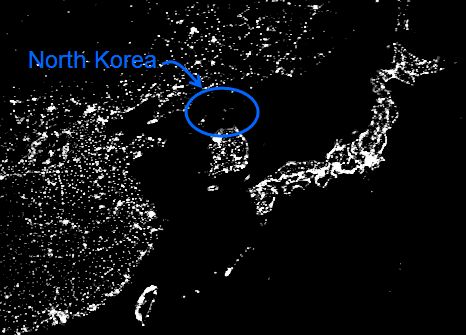
Time for the PLA to Dissolve the KFR


It's official.

The ROK has confirmed that North Korea attacked and sunk a ROK naval vessel last March.

This act of aggression tops off years of increasingly abhorrent and belligerent behavior on the part of the KFR, including the kidnapping South Korean and Japanese citizens, detonating two nuclear weapons (although at least one was probably a fizzle), helping Syria build a nuclear reactor, being the worst regime in the world WRT proliferation of nuclear and ballistic missiles and attacking a South Korean vessel last fall. All of this in spite the KFR's udder lack of respect for their own citizen's well being and North Korea's continued existence only as a criminal enterprise - wholly owned by the Kim family- masquerading as a real state.

This attack should be viewed by the U.S., ROK and Japan as the last straw. For too long we've acquiesced in the face of intimidation from the KFR; each time reassuring ourselves that if we just give in, just this once, just give them a bit more aid or a bit more time the regime will surely collapse under the weight of its contradictions and North Korea can follow its ideological predecessors into the dust bin of history.

But this assessment appears, increasingly, to have overlooked key features of the North Korea state-religion known as Juche. Juche, as B.R. Myers agues in the book The Cleanest Race has more in common with late-era Japanese emperor worship than with more Europeanized versions of Marxist-Leninism or Chinese Maoism. This is an important point to consider, because the Japanese, when faced with the loss of their empire, did not engineer a peaceful "soft landing" but instead lashed out in a wave of suicidal violence more fitting to a the death a cult than to a nation-state. Eventually, Japan had to be beaten into submission, because their death cultish state-religion prevented them from accepting a less destructive alternative.

With this in mind, and given the KFR's recent behavior, it stands to reason that eventually North Korea will choose to go down swinging, rather than negotiate a peaceful end to the regime. The main question that remains is how to tell the difference between North Korea's normal, brutish behavior and beginning of the end of the KFR? Given that Kim is in poor health, that North Korea's economy very nearly collapsed last year and that there is a likely a battle brewing over who will take the reigns once Kim is gone, I think its a good bet that we should consider this latest escalation an indication that the end of days for the KFR has begun.

Apocalypse! Nowish

So what should we do? Should we join China in postponing the inevitable by propping up the regime with food and fuel oil? Or should we take direct action against North Korea's military, hoping that a defeat of North Korea's army allows us to undertake an OIF style "regime change?" Alternately, how do we pressure China to take a greater interest in restraining or even dissolving the KFR?

A direct military strike should be a last resort. The KFR is China's version of Frankenstein's monster, and they should bear the brunt of both blood and treasure lost in its eventual disposal. Having said that, China should get to dictate peace terms. They get to pick the next generation of North Korean leadership and design the new North Korean political system. The ROK and the U.S. should publicly proclaim that reunification is a goal for the distant future, and not something that must be set in stone at the dawning of any post KFR end state. It is reasonable for China to want to mitigate the risk of humanitarian crisis on their border by maintaining some semblance of order in North Korea and it is in the interest of the whole world for North Korea's weapons systems to be peacefully secured and disassembled rather than be looted by hungry peasants - or, worse - greedy former DPRK officers seeking a "severance package".

China's takeover of the DPRK could take any form, but I'd give preference to a Romanian style "Ceausescu" scenario whereby the DPRK military disposes of the KFR and then surrenders the country whole to the PLA in exchange for cash settlements for high ranking officers and whatever immunity deals may be appropriate vis-a-vis Japanese, South Korean, Chinese, American and ICC legal systems. China would then be free to mine the DPRK for all the natural resources it can grab while slowly opening the DMZ to allow controlled visitation and eventual immigration into the South. Call it "humanitarian reunification"; allow families to reunite and eventually allow cross border travel while fire-walling the political and economic systems of the South off from the worst after effects of an extremely messy and expensive full on political reunification. Over 1 or 2 generation the people of the former DPRK will have to make their own decisions WRT independence, reunification or some sort of quasi-union with China.

Unfortunately, it seems China wishes to maintain the status quo for the time being. Like the scene in Goodfellas where Tommy and Henry "bust the joint out" (h/t Tom Barnett), China seems to plan on using their proxies in the DPRK to keep the people in check while the PRC carts away everything that isn't nailed down. If they're sending food and cell phones to the people it's not the worst deal ever, but if North Korea becomes a defacto colony of the PRC then China will have to take full responsibility for the actions of the DPRK's military.  That means they owe the ROK an apology and monetary damages to the families of the sailors killed. If China ins't in control of the DPRK's military, then they better take control, and that is why a PLA sponsored coup is the best solution for everyone.

So what if China refuses? China seems less than enthusiastic when it comes to dealing with reality on the ground in the DPRK, as though if they just keep wishing maybe the KFR will morph into Deng Xiaoping. This is unlikely. As I said above, Juche is militant state-religion cum death-cult, and I don't see a true soft landing for the KFR in the offing. So the choice comes down to what type of "hard" landing the powers that be (U.S., PRC, ROK, Japan) desire. Do we want to bide our time, waiting for the other shoe to drop - possibly on Seoul, Beijing and Japan - or do we want to conduct a "controlled burn", so-to-speak, collapsing the KFR at the time, place and pace of our choosing, allowing the world the opportunity to prepare before D-Day?

Secretary Clinton is in China this week, and whatever else is on the agenda should be pushed aside so that she and her Chinese counterparts can focus on a single question:What is to become of the DPRK? Clinton should begin by handing Hu a map of the DPRK and a pencil and asking him to draw a line to indicate how much of a "buffer state" China would ultimately like to keep  between themselves and the South. This meeting has one rule: whatever Hu asks for he gets, period. If he wants to keep the 38th, fine. If he wants to move the border far north to some small rump-state DPRK, well, that's ok too. As long as Hu is ready to pull the plug on the DPRK's military, he gets what he wants.

And if Hu says no, the U.S. should be prepared to really turn up the heat on the both the DPRK and the PRC. Hillary should be prepared to tell Hu that we're prepared to lose Seoul to collapse this regime, and that in two weeks the U.S. Navy will begin regular exercises just outside DPRK territorial waters. She should be able to tell him that we're re-listing the DPRK as a state sponsor of terrorism and ending all humanitarian assistance to people of the DPRK, save a daily messages blasted, in Korean, from south of the border letting the North Korean people know that if they rise up to overthrow their government we will support them. Clinton should warn the PRC that the U.S. will be getting very aggressive with our exercises, pressing closer and closer to DPRK territory each day and that the president will be giving a public address in two weeks where he offers full American assistance to any DPRK general who participates in a coup against the regime. The U.S. should also dump counterfeit North Korean currency into their economy anyway we can. These are all things the U.S. can do, by ourselves, and should do if China refuses to play ball.

Beyond unilateral action, the time has come for Japan to make one of their periodic cryptic statements about their nuclear program. Only this time, they should do it with defense ministers from South Korea and Australia present. And it should be followed by all three countries formally stating their intentions to withdraw from the NPT and conduct a joint test of a prototype nuclear weapon in the Australian outback if the KFR is still in power in 12 months.

This leaves China with two choices, take the DPRK down - and set up a situation where the PRC still gets to profit - or let the chips fall where they may and see what those crazy Americans do. If the DPRK decides to blow itself out in a blaze of glory, China is likely to suffer as much as anyone. Large Chinese cities, probably including Beijing, are almost certainly in range for North Korean missiles, and both Japan and South Korea are protected by sophisticated ABM systems, whereas Beijing is a fairly soft target. Even if somebody takes out the KFR's ability to launch missiles, China will surely face a massive influx refugees, some of whom may be KFR special forces on a suicide missions.

Collapsing the KFR is one of those global public goods that would benefit the whole world for decades to come. I've predicted that collapsing the KFR could make Clinton the best SECSTATE since Kissinger and Obama the best foreign policy president since Richard Nixon. Doing it the right way, on positive terms, would not only bolster Obama and Clinton's legacy but could also be remember as the moment when China stood up to take a responsible position on regional security. This historic mission is cause worth undertaking.

Thursday, April 22, 2010

Planning to Fail in Afghanistan, pt 5: Planning to Fail in Afghanistan the Movie

Here is my presentation from this year's "Capital University Symposium on Undergraduate Research". My presentation was entitled "Moral Warfare in Southwest Asia," and it was based on the paper I wrote this past winter by the same name.

In other news, I was also awarded the Kenneth J. Martin award for scholarship by a senior in political science. The award is a real honor because both the nominations and voting come from the department faculty, so I must have made a few fans in the last 4 years. I guess I can now call myself an award winning political scientist.


Saturday, April 17, 2010

Planning to Fail in Afghanistan, pt 3


Mobile Blogging from here.


"I've seen the future, and it is murder."

--- Lenord Cohen

Is this story just another piece of idiot journalism from the NYT, or what?

I read this piece and I'm filled with a sense of both dejavu and a deep and unabiding sense of fear and loathing.

Suppose Obama is, indeed, planning to fail in Afghanistan. After he begins the pullout, then what? Does he go before the American people and just embrace defeat? After reading this article, reading Obama's nuclear posture review and seeing his circle jerk - er, "Nuclear Security Conference" - last week I'm wondering if there isn't an incredibly dumb yet surprsingly cohesive strategy in the whole thing: Barack Obama is going to win reelection by bombing Iran.

Sounds crazy, right?

But consider that perhaps things have not really gotten much better in Afghanistan. Consider that Obama has basically acquiesced to ISI/Taliban control of everything outside of Kabul. Consider that Obama then will be branded as mister "cut and run" by his opponent in 2012. Consider that Rambo is telling Obama that he's going to have to "triangulate" by getting tough on something and Iran is an easy target.

The more I think about it, the more sense bombing Iran probably makes to the increasingly vainglorious and strategicly tone- deaf crew we have running the policy shop at 1600 Pennsylvania Ave right now. The target package is fairly straight forward, and with a combination if cruise missile and B2 strike, coupled with a lingering campaign conducted via drones, a war against Iran must look like quit a splendid little war that we are certain to win- or at least end- in a really short time horizon.

Of course by losing Afghanistan and bombing Iran Obama will have completely erased all strategic rationale for his presidency. We will be no better off than if McCain/Palin had won and Obama's entire first/last term will have been a complete waist.

And the American people won't fall for it. Iran will squeeze whatever assets we have left in Afghanistan and Iraq and they'll do everything they can to escalate the adiministration into some kind of naval confrontation in the Gulf. It'll become clear pretty quickly that the attack achieved nothing and will probably hasten Iran's desire for a quick shoot just to prove that they still have a nuclear capacity.

And then Romney is going to have one hell of a mess on his hands January 21st, 2013.

Tuesday, April 6, 2010

This is what happens when you pal around with terrorists...


Everyone has seen this video, I'm sure. Everyone has also heard a lot of the bullshit emanating out of people like James Fallows, who is a serious journalist and should know better. He should never compare the acts of troops under fire to the torture that occurred at Abu Ghraib.

This is what I see: Two journalists got a lead on a hot story - they were going to have the chance to hang out with a group of Mahdi Army guys. At that moment, these particular insurgents were involved in a battle with the 1-8th and 2-16th of the American 2nd Infantry Division. The ground pounders called in air support, which was delivered via an Apache helicopter, and the helicopter crew made a call - the best call they could possibly make given the information at their disposal - to engage a group of armed men operating in a region where the ground units were reporting fire. The insurgents were armed with AKs and RPGs, which can be clearly scene in the video. Later, a unmarked black van appears, several men pile out of the van and picked what appeared to be a wounded insurgent and also begin collecting weapons. The aircrew then requests, and is given, the green light to destroy the unmarked van.

I don't see anything in this video that violates any sort of Rules of Engagement or Rules of Land Warfare. The black van was not marked with a red cross or a red crescent. The journalists did not report their position  to the U.S. Army ahead of time. To the best knowledge of both the ground units and the aircrew, all of these men were insurgents setting up an ambush in the path on an American infantry unit.

Being a war correspondent is risky. I have a great deal of respect for the men who do the job, but correspondents know the risk. They know - especially in an insurgency where the combatants don't wear uniforms - that they could be mistaken for insurgents themselves. They know - or should - that air power, mortars and artillery are all inherently indiscriminate and if you are standing beside a target you might get killed. While its a tragedy that these two journalists were killed in combat, it is not a war crime, and the ultimate responsibility for their death rests, not with the U.S. military - which as the video demonstrates goes out of its way to confirm a target before engaging - but with the journalists themselves, who willingly put themselves in harms way in pursuit of a story. 

Sunday, January 10, 2010

Stumbling Towards Bush 4.0 Territory

Looking back, president Bush went through three distinct iterations during his two terms in the White House.

Bush 1.0 (1998-September 10th, 2001) During this phase Bush was the "compassionate conservative", successful and popular governor of Texas and a man who knew that there were republican solutions to traditionally Democratic issues such as education.

Bush 2.0 (9/11 2001 - April 2004) This is the version that got up on pile of ruble in the days following 9/11 and promised a group of workers at ground zero that "the people who knocked these buildings down will hear all of us soon." It was this notion of Bush as the warrior, the protector, that led directly to his reelection in November in 2004. However, by November of '04 the creation of the third version of Bush had already begun.

Bush 3.0 (April of 2004-1/09) In April of 2004 Rumsfeld offered Bush his resignation because of gross abuses of Iraqi POWs. Bush refused to accept the resignation. This is the president Bush that is most remembered today; the man who let events get the better of him. The high - or low - point of Bush 3.0 was his "heckuva job Brownie" moment in the days following Hurricane Katrina.

And so it came to pass in November of 2008 then senator Barack Obama was elected to bring change. Throughout his campaign, Obama promised repair the damage done by the Bush administration and restore transparency and accountability to government.

But that was Obama .07, the public beta released for testing before all the bugs had been ironed out.

The first official release of Obama 1.0 has thus far proved buggy and has often been corrupted by errant files left over from the previous software (Bush 3.0). And on Christmas day, 2009, the Obama OS suffered its first full-scale kernel panic requiring a complete reboot. So far, the administration has decided to release a patch, which is designed to correct the security flaw in Obama 1.0 and update the system to Obama 1.01. Unfortunately, this may not be enough to really correct the security flaws:

Everyone who read the name "Umar Farouk Abdulmutallab" prior to December 25, 2009 should be reprimanded and fired.

The White House findings state that, "Mr. Abdulmutallab possessed a U.S. visa, but this fact was not correlated with the concerns of Mr. Abdulmutallab's father about Mr. Abdulmutallab's potential radicalization." It's an embarrassing sentence of bureaucratese in its own right, but more so when considered in context. The State Department didn't revoke Abdulmutallab's visa because an office clerk misspelled his name in a database.

Has no one in the intelligence community ever used Google? When "Abdulmutalab" was typed in, did the computer not ask, "Did you mean 'Abdulmutallab'?"

Another admission that crosses the threshold of bewildering into the realm of criminally negligent: the National Counterterrorism Center has a database of all known and suspected international terrorists. Umar Farouk Abdulmutallab was added to that database.

But that database does not feed directly into the TSA No-Fly List.

Who more than known terrorists belong on the No-Fly List? There should be no human involvement required here. One line of SQL database code could have averted disaster.

According to the White House, when the CIA and NCTC got the name of a radicalized militant from the militant's own father, and a warning that he was planning an attack, they did not search "all available databases to uncover additional derogatory information." How many databases are there? And how many terrorist databases must one appear in before he or she is considered a threat to U.S. national security?

This wasn't a ticking time bomb situation involving a lone wolf under the radar. Such a terrorist will succeed, and there's nothing we can do about it, aside from remaining vigilant. But the United States already knew about Abdulmutallab, and learned of his intentions on November 18th -- a month before he struck.

Most grating in the White House report is the repeated notion that Abdulmutallab's plot failed. It didn't. Nine years after 9/11, and after billions of spent dollars in needless security, confiscated fingernail clippers, and dumped breast milk, he succeeded in smuggling explosives onto an airliner destined for American soil. He succeeded in igniting the explosive. If not for dumb luck involving bad chemistry and a brave Dutch film director, there might today be a smoldering crater in Detroit.

Worse, there are a number of indications that the Bush 3.0 software, which was supposedly deleted, may be coming back:

After the attack, President Obama remained in Hawaii and enjoyed a Christmas vacation on the golf course. After the attack, National Counterterrorism Center director Michael Leiter took a six-day skiing holiday. After the attack, CIA director Leon Panetta remained in beautiful Monterey, California. The nation, the administration claims, can be governed from afar, and that's probably true. But when terrorists attempt a major strike on U.S. soil, isn't it a good idea to have someone in the White House situation room above the rank of janitor?
This tells me that Obama 1.0 - now 1.01 - is treading dangerously close to becoming Bush 4.0. And all it takes in one successful attack inside the U.S. and I have no doubt that the house and senate will pursue there own method of deleting the corrupt software, which will be very divisive and dramatic for the whole country. 

Thursday, January 7, 2010

A Step in the Right Direction

I applaud the president for taking responsibility for the Christmas Day Attack -aka The Boxer Rebellion (he he) - but I fear his proposed changes, absent the ending of a career or two, will simply create more paper shuffling and CYA mentality:

The government will strengthen criteria for putting people on no-fly lists barring them from U.S. aircraft. Authorities will comb databases of people suspected of ties to terrorist organizations and determine whether any of them have U.S. visas. The man accused in the Christmas airliner attack, Nigerian national Umar Farouk Abdulmutallab, had a visa, even though he had recently been added to a government watchlist.

What was the point of the terror watch list? I heard recently that there might be 500,000 names on the government's terror watch list. 500k isn't a "watch list", its like 50 divisions. If Al Qadea had 500k people they would attempt a conventional combined arms invasion of Egypt, not send some goon to blow up his pants on an airplane.

What I really want is a system to stop somebody from getting on a plane - not a scanner - not a series of questions, but a system whereby a CIA station chief receives a tip - say the name of a foreign national who is reasonably suspected of receiving training in martyrdom operations - and he can quickly - within maybe 1 or two minutes, tops, put out an APB to every entry point to not let someone with the following name, nationality, etc, cross. The technology required to do this is a very sophisticated and expensive piece of technology known as Gmail.

But the level of cooperation between the CIA, DOS and DHS is probably not possible, and the  devolution of authority into the hands of lowly CIA station chiefs (not really a lowly position, but in the mind of some deputy COS in D.C. they are) would cause fits back at both Langley and Foggy Bottom but I believe it is an aspirational goal.

Also, why is a person who is banned from England allowed to enter the U.S.? Anyone barred from entering either the U.K. or E.U. should undergo a extra layer of scrutiny before being allowed entry into the U.S.

Wednesday, January 6, 2010

Madame Secretary, resign pt. 2

Perhaps I was a bit hasty when I called for the resignation of the secretary of DHS.

Thinking back, I now wish I had called for the resignation of the director and all deputy directors of the CIA as well whomever is directly in charge of the foreign service.

And the secretary of DHS.

Here is why:

ABC ferreted out the truth behind news reports that Umar Abdulmutallab's father alerted the U.S. Embassy about his concern that his son had gotten involved with radicals. The way such reports were worded conveyed the idea that the CIA didn't have a smoking gun to work with. Actually, the CIA had a smoking cannon handed to them.

ABC learned that what really happened is that Umar phoned his father to say he was calling for the last time because the people he was with in Yemen were going to destroy his SIM card. That would make his phone unusable. And that was as much telling his father he was entering the final phase of training for a terrorist suicide mission.

His father immediately alerted Nigerian intelligence officials that he was afraid his son was preparing for a terrorist mission in Yemen. The officials then brought him directly into the presence of the CIA station chief in Abuja on November 19.

So it's not as if some worried father wandered in off the street to unburden himself to a clerk at a U.S. embassy. And note that the Nigerian intelligence officials didn't run the risk of getting trapped in voice mail hell or hearing, 'I'm sorry your email got lost in the shuffle.' They made Double Dutch sure the station chief heard the father's statement and understood its import and urgency.

What happened after the station chief took in the father's account? Report, file, and forget:
The next day the embassy sent out a thin report to U.S. embassies around the world warning Adbulmutallab may be associating with extremists in Yemen. The CIA official compiled two more robust reports following the meeting with the suspect's father. One was sent back to CIA's Langley, VA [headquarters]; the other remained in draft form in Nigeria and was not circulated until after the attempted attack on Christmas Day, according to a U.S. official.[...]

The White House better be on notice, because if something goes bump in the night in the near future a quick impeachment is sure to follow. I realize there will be a political cost - short term, in my opinion - for a major house cleaning in a mid-term election year, but the Dems are toast in November anyway, and I think the American people would give the president a lot of credit for - shock! - holding the people responsible for our safety responsible for this lapse.


Wednesday, December 30, 2009

Madame Secretary, resign...

I join Andrew Sullivan in calling upon secretary of Homeland Security Janet Napolitano to resign over the attempted bombing of an airliner on Christmas Day.

There is ample evidence the government knew quit a bit about the bomber long before he boarded the plane but did little to stop him.

Someone needs to loose their job over this. There is no reason a man with such strong links to AQ, who was already banned from entering Britain, has any business coming into the U.S. under any circumstances. It may not be entirely Napolitano's fault, after all, I'm sure she was just following procedures that were put in place 8 or more years ago, but the buck stops at the top, and that is why the president should send an unambiguous message to his cabinet secretaries and all public managers in the employee of the Federal Government: incompetence will have consequences. Security lapses of this magnitude will end careers, both political and civil service, because George "heckuva job Brownie" Bush is no longer president. Remember, this attack follows the shooting at Fort Hood, another incident where clear warning signs were ignored.

At the same time, I'd also like to endorse Tom Friedman's idea to reduce the reward for Osama Bin Laden - to one penny, because I think Friedman was making sense when he wrote:

All we are doing is feeding their egos, and telling them how incredibly important they are, when we not only put a $25 million bounty on their heads, but in the case of bin Laden, double the figure. We are just enhancing their status on the Arab street as the Muslim warriors standing up to America, and only encouraging other megalomaniacs out there who might have similar fantasies to follow suit. We should be doing just the opposite - letting these two losers know that we don't think they are worth more than a penny or a pistachio.
This latest incident just confirms what I've believed for a long time - the Varsity team played for the first and last time on 9/11. Since then, Bin Laden has been reaching deeper and deeper into the bench for players, and the results have less and less spectacular, culminating in last Friday's lame attempted bombing that went off like something out of Jihad for Dummies.

So mister president, two things; fire JN and drop the reward on Bin Laden to, oh, I don't know, how about an Ipod filled with pictures of you golfing and playing with your dog?  

Sunday, December 20, 2009

Obama's Middle East Endgame: Part IV - The Iran/Iraq Dynamic

In 2003, when the U.S. invaded Iraq, the given reason was to stop Iraq from developing NBC (nuclear-chemical-biological) weapons.

Since Iraq has stabilized I've been wondering how long it will be before the U.S. takes a very different view of Iraq's nuclear ambitions, do mainly to Iran's nuclear program and Iraq's need to deter their historical enemy in Persia - which was the same reason Hussein sought nukes in the 1980s.

So today, as Iraq and Iran once again play their dangerous game, I imagine there are people inside both the Iraqi defense ministry and the American D.O.D. who are considering way to deter Iranian aggression against Iraq. And because Iran is a de facto nuclear power at this point, the options for deterring them are few:

1. Iraq could develop a notorious, indigenous, crash nuclear weapons program.
2. Iraq could embrace nuclear power for civilian use and follow the German/Japanese model of becoming a de facto nuclear power.
3. The U.S. can make an explicit security guarantee which places Iraq within a region wide, NATO style security agreement.
4. Iraq could pursue less kinetic means of fighting against the Iranians. For example, Iraqi government officials and clerics could express their moral outrage at every act of violence the Iranian regime perpetrates against its own people, or perhaps encourage Kurdish rabble rousing among the Iranian Kurdish population.

My guess is that over the short term options 2, 3 and 4 will be utilized by Iraq/the U.S. against Iran. Option 3 is a U.S. centric option but option 4 is an Iraqi centric option, because an Iraqi Shiite Muslim has the moral authority to speak out on behalf of the Iranian people that an American government official does not.   

Wednesday, December 9, 2009

Moral Warfare in Southwest Asia Pt 3: Obama's War


A Way Forward: Obama’s War
            On December 1st, 2009 President Barack Obama recommitted the United States to winning the fight over the primary loyalties of the Afghan people. The most publicly debated piece of Obama’s decision involved whether or not send additional troops and how many to send. But the crises that exist and are exploited by the QST today in Afghanistan are as much a problem of strategy as resources. So while the 30,000 additional troops promised by the President at West Point this week could play a critical role securing Afghanistan, it will be the implementation, more than their raw numbers, that will determine success or failure. To that end here is my assessment of what must be done to tackle each of the Afghan crises and in so doing undermine the Taliban’s abilities to exploit weaknesses in Afghan society.
Fixing the security crisis: At the COIN conference hosted by the Marine Corps University nearly every military officer, active duty or retired, pointed to a lack of joint-ness both between civilian and military agencies and between the U.S. and our Afghan counterparts as a serious source of concern. So the first step in any strategy that will improve security must be an increased emphasis on unity of effort between civilian and military operations and Afghan and American operations.
            The first obstacle to this sort of joint effort is to put aside the causality aversion that prevents American officers and NCOs from being embedded in Afghan National Army units. Partnering with local forces – really partnering – putting American and foreign forces in the same barracks with the same weapons eating the same chow and facing the same threats (Marine Corps University , 2009) – was one of the cornerstones of the success of the “surge” in Iraq (West, 2008; Kilcullen, 2009) and will be equally important in Afghanistan. This is the best way to train the officers and NCOs that will someday form the backbone of an independent Afghan army and having Afghan partners nearby is always helpful when conducting operations in populated areas.
            Getting into populated areas must be another part of any successful strategy to improve security. 80% of the Afghan population lives in rural areas, but currently the coalition has their biggest presence in urban areas that are both geographically and culturally separate from the Afghan population (Johnson & Mason, 2009). It’s important to keep in mind that it was in urban areas such as Kabul that young students became convinced that Afghanistan – an agrarian, tribal society with a literacy rate in the low double digits – was ripe for conversion to Marxism. This offers a clue to how far removed from Afghanistan the urban areas can be. In short, we cannot protect the Afghan people nor help them fight back against the QST unless we are out where they are, in the rural areas.
            The model for joint-ness suggested by Thomas Johnson and M. Chris Mason might offer the best hope for success. They propose the creation of 200 District Reconstruction Teams, which may seem like a large number but probably would have been possible even without the surge of troops. The DRTs would be composed of both civilian and military personal and partnered with Afghan forces and stationed throughout the country in rural areas. These DRTs would allow the Afghan forces to focus on patrolling the populated areas 24 hours a day while freeing up American forces to take offensive action against GT groups in the area and provide backup to the Afghans on patrol. Taking offensive action against the GT, ending the ‘free shots’ that the GT has been enjoying for too long must be a top priority (West, 2009). At the same time, USAID and State Department officials embedded with the DRTs can focus on local economic development and on finding jobs for some of the accidental guerillas that could otherwise find jobs with the QST (Johnson & Mason, 2009). The idea of buying off accidental guerillas is already being experimented with in Jalalabad, and early results appear hopeful (Filkins, Afghans Offer Jobs to Taliban Rank and File if They Defect, 2009 ).
            When it comes to non-military police forces, the current national police force has many of the same problems as the military in terms of lack of training and discipline and is also considered extremely corrupt, to the point that most Afghans do not even want the police in their village (Marine Corps University , 2009; Moyar, 2009). Perhaps the best solution to this problem is to accept that there is unlikely to be much of a national police force for some time and turn focus to training local tribal militias to fight back against the QST. These militias provide both employment and honor for local residents and could reduce the temptation to become and accidental guerilla. As with the plan to buy off local fighters, the training and support of local militias is already being experimented with in select regions and is seeing positive results (Filkins, Afghan Militias Battle Taliban With Aid of U.S. , 2009).
Solving the crisis of legitimacy: Focusing on the district, versus nation-state or provincial level, aids the coalition in overcoming another crisis; the crisis of legitimacy. It may be time to accept that the Afghan people are going to find a primary identity with their tribe and in the local district for the foreseeable future, so America’s historical focus on the nation-state (read Karzai and his administration) will ultimately be for naught. As Steven Coll has recently observed in Foreign Policy Magazine, Afghanistan has been most successful with a weak central government and diverse regional power centers (Coll, 2009). The focus on the local level allows the U.S. to work with long held tribal traditions in Afghan society and could allow us to make progress without having to completely reboot Afghan identity, a task which neither the Red Army or the QST could accomplish with far harsher tactics than we would be willing to use.
Solving the crisis of trust, at home and abroad: President Obama probably did little to assuage fears of our eminent departure when he promised to begin withdrawing troops in 18 months (Gall, 2009). On the other hand, the president left himself plenty of wiggle room by phrasing July 2011 as the date the U.S. will “begin to transition out,” (Obama, 2009) rather than as a date certain to leave. In choosing his phrasing carefully, the President seems to understand both the crisis of trust in Southwest Asia and the potential political crisis at home. Already, members of the President’s party in the House are starting to turn against the war in Afghanistan (Karl, 2009). Mitigating the domestic political damage will be tricky, but the President must be prepared to define his mission clearly, forcefully and publicly – as he did in his December 1st speech – when other politicians question his intentions in Afghanistan. It’s worth noting that the President’s December 1st speech appears to have had the desired effect, because a recent CNN poll that 62% of Americans now favor the deployment of 30,000 more troops to Afghanistan (CNN, 2009).
            When it comes to mitigating the crisis of trust in Pakistan, the U.S. would do well to focus on more than just the relationship between American and Pakistani security interests. Earlier this year Pakistan asked the President for greater economic connectivity between our two nations (Simon Denyer, 2009) and the President would do well to pursue that path. One of the great sources of mistrust between Pakistan and the U.S. results from Pakistan’s recognition that, in a hypothetical war between India and Pakistan, the U.S. would take India’s side because India and the U.S. enjoy hundreds of billions in trade and economic connectivity whereas trade between Pakistan and the U.S. is minuscule. So the President can promise to send x number of troops to Afghanistan and leave them there indefinitely as often as he likes, but until Pakistan becomes more integrated into the global economy they will continue to focus myopically on their unstable relationship with India and continue to hedge their relationship with America and their relationship with militants on their border with Afghanistan.


Conclusion: Known Unknowns and Hope Without Guarantees
            When considering Southwest Asia and America’s future there it’s important to consider what Donald Rumsfeld used to call “known unknowns,” meaning situations which we think could happen but do not know where or when. These situations represent tremendous variables to everything I have written about the war in this paper, and they include a successful attack by QST forces upon Pakistani nuclear bases, a QST or AQ attack on the scale of 9/11 on India or China, an Israeli attack on Iranian nuclear facilities and, perhaps most important, a major terrorist attack inside the U.S. Any one of these situations could significantly change both the stakes and the situation on the ground in Afghanistan and would require a readjustment of American strategy in the region. That being said, there are five main points American policy makers must consider if they wish to leave Afghanistan a stable country within the next half a decade or so:
1.     Security efforts must be joint efforts, meaning they must involve both American and Afghan forces and both civilian and military personnel of both countries.
2.     Securing the population is essential and that means the coalition must locate the labor near the problem, security forces must be permanently stationed in rural areas and as close to the population as possible.
3.     The coalition must recognize traditional sources of authority in Afghan culture and work within these traditional boundaries as much as possible. Building an Afghanistan that does not respect the traditional tribal district or woleswali level of organization will prove as futile to the coalition as turning Afghanistan into a socialist utopia proved for the Soviets.
4.     The coalition must make every effort to cleave the “accidental guerillas” from the true takfiri believers. To this end, payoffs, amnesties, and standing up local security militias should all be experimented with on a district level.
5.     Security is 90% of the problem until it isn’t, and then it becomes 10% of the problem. So while security is an immediate and urgent problem putting Afghanistan on a sustainable pathway to stability will involve more than just killing bad guys and posting guards. To this end, the U.S. must include China in any plan that hopes to succeed, because the Chinese are already sinking billions in Afghanistan’s mining industry and even taking token steps to help with security force assistance (Page, 2009; MacWilliam, 2007).
      In closing, I believe that Afghanistan remains a salvageable situation, but one which could still turn out very badly for the United States. In Lewis Sorley’s A Better War (1999) the author recounts a number of victories the U.S. experienced in Southeast Asia between 1968 and 1975, including the virtual destruction of Viet Cong and the repeated defeats of attempted North Vietnamese invasions of the South. But at the end, the U.S. simply could not maintain a domestic political consensus strong enough to continue to support the South. Vietnam is a powerful lesson of the need for a leader to remain focused on maintaining public support for operations overseas. And in understanding that sometimes we can do many things right and still wind up with a bad outcome.

Continue to Works Cited Page