In his new book The Next Hundred Million: America in 2050, Joel Kotkin attempts to extrapolate current trends for forward 40 years to create a vision of exactly where and how the next hundred million Americans will live. I heard about this book in Tom Barnett's WPR column last week and immediately ordered it, looking forward to a nice bit of Utopian futurism. What I found was a somewhat meandering history of urban politics in America that is at once informative about the future of medium sized cities and uninformed about international politics and economics. The book is also long on description but short of prescription, preferring to say "this will happen" as opposed to "this is how things will happen".
Kotkin begins his book by taking down a couple pieces of conventional wisdom about the United States - mainly that the U.S. is currently in a state of decline. Kotkin is especially rough on the notion that either China or India is poised to overtake the U.S. economically, pointing out that both countries still have a large percentage of their populations living in poverty and that China in particular is set to age rapidly, having over a third of their population over the age of 60 by the mid 2030s. Kotkin is certain that this rapid aging (which also impacts Japan and the E.U.) will bedevil most other major powers while the America's ability to integrate new immigrants will allow us to remain dynamic. Ultimately, Kotkin offers a vision for a healthier, wealthier, post-racial, post-ethnic America that will remain the global leader in innovation even in the mid 21st century.
What's Useful About this Book:
As a resident of Columbus, Ohio, I know that Kotkin's analysis of the folly of a medium sized mid-western city trying to become a "luxury city" is 100% accurate. Kotkin calls out Cleveland and Dayton specifically, but as I watch the local debate about whether or not to bail out the local NHL franchise (money looser - big time) I think his point is dead on. Kotkin's advice is that medium sized cities need to focus on what he call "vanilla" services, such as police, fire and local schools, as opposed to marque projects "downtown" which are designed to attract the "creative class" but typically wind up money pits in all but the largest and wealthiest cities. Kotkin compares the results of Potemkin luxury cities, like Cleveland, Philadelphia and Dayton, with vanilla cities like Austin and Phoenix, and suggests that the path of the latter is a better strategy for 21st century sustainability.
On the topic of sustainability, Kotkin is bullish on not only on America but the global environment as well, taking a very Lumborgesque "wealthier is healthier" outlook. And Kotkin is skeptical that the current environmental obsession with urban living, believing that Americans are unlikely to ever give up their preference for owning their own home and living in the suburbs. Kotkin believes that current Great Plains small towns in states such as Iowa and Nebraska will become the suburban boom towns of the next several decades.
Less Useful Sections of the Book: Unaddressed Issues:
1. Kotkin spends exactly zero time addressing the coming Medicare implosion. I think it's beyond remiss to write a book in 2010 about America in the year 2050 without seriously addressing the financial issues the U.S. government faces.
2. Kotkin's read on international politics is, at best, short sighted. He seems to embrace the notion of America as an ever-evolving institution but quickly reverts to The Clash of Civilizations when discussing other world powers such as China and Russia. He takes the so-called Beijing Consensus way too seriously, seemingly ignoring the myriad of problems which plague China's political system - and which justify his belief that China will not surpass the U.S. - and suggests that China will develop a sort of Sino-Globalization opposed to the United States. Can't have it both ways guy - either China has a long way to go or they've discovered a longer lasting light bulb - can't be both. For what its worth, I'm a big supporter of his first proposition - China has a long way to go before they are truly strong and what we've seen in the last 3 decade basically amounts to China picking a lot of low hanging fruit.
Kotkin's read on Russia is even worse, bordering on silly even. He suggests that Russia will successfully embrace something called neo-Czarism. This supposition completely ignores the failure of the Russian economy in the wake of the financial crisis and also ignores Kotkin's earlier read on Russia's weakness.
3. Perhaps the biggest weakness of Kotkin's book has to do with point #1. Kotkin makes a series of vague suggestions for policies but offers no way to pay for them. He writes vaguely about energy policy and industrial policy but doesn't explain how America can square the circle, so-to-speak, with regard to the increasing share of overall government spending going to entitlement spending and the need, if we are to pay for Kotkin's policies, to increase discretionary programs.
In conclusion, The Next Hundred Million offers a welcome dose of optimism but is long on assertions and short of policy national policy suggestions. On the other hand, Kotkin's observations about housing patterns could be very useful to students or practitioners of state and local politics. In fact, I recommend Columbus mayor Micheal Colman read this book ASAP. Beyond local politics, however, Kotkin's theories could use a bit of fleshing out, and I might recommend he look into writing a follow up which examines what type of economic policies would best empower state and local governments to follow his policies.
I give this book 3 out of 5 stars.
Showing posts with label E.U.. Show all posts
Showing posts with label E.U.. Show all posts
Sunday, February 7, 2010


Tuesday, October 13, 2009
Poland Must Take the Lead on Combating Global Warming! And they should ask Pakistan, Iran and North Korea for help on the matter...
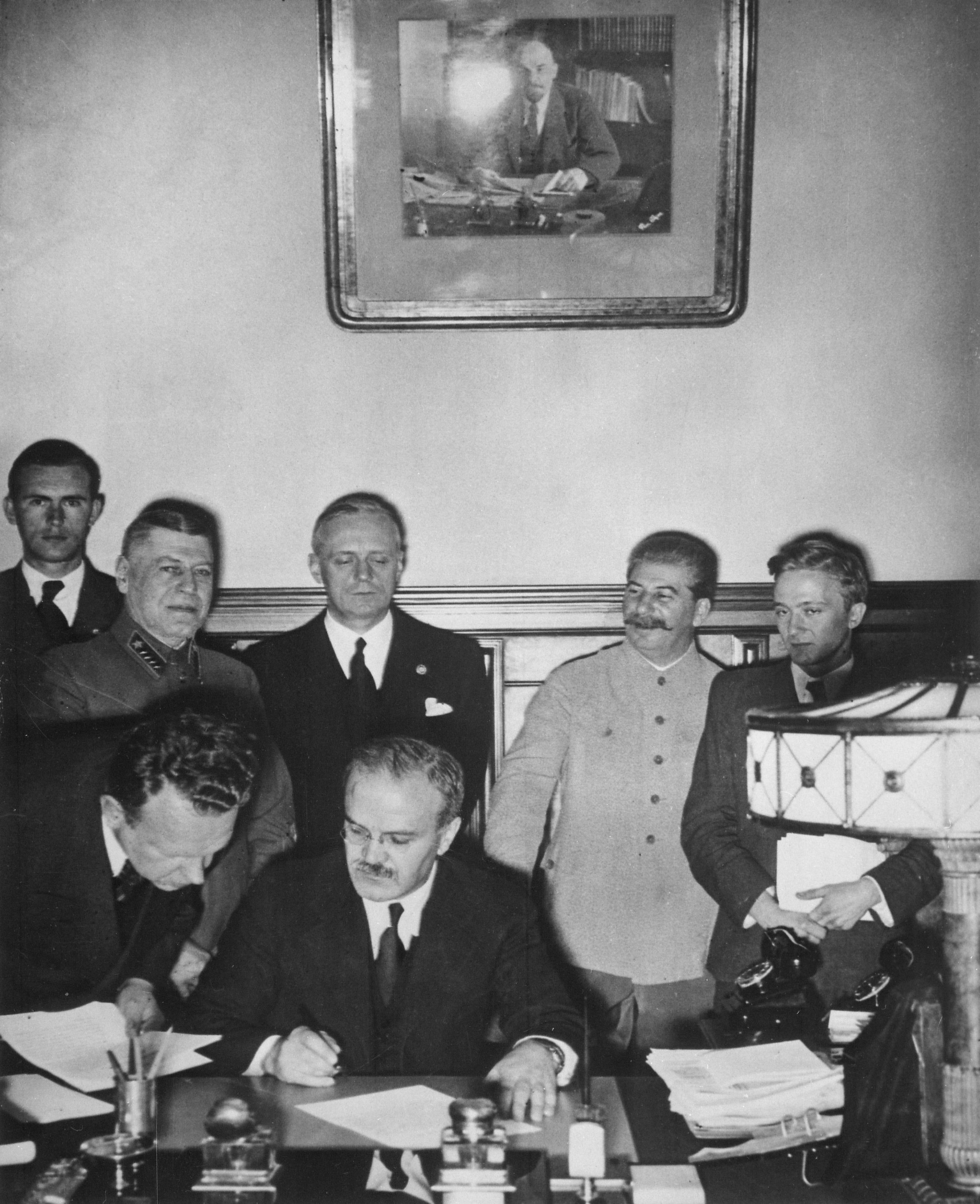
This picture depicts global warming and the 3rd Reich, up to no good.
This is an excellent article about why Poland is so afraid of global warming.
Poland should be terrified of global warming.
Global warming considers Poland part of it's sphere of influence.
And, as before, global warming is making a deal with Germans to divide Western and Eastern Europe:
Currently, Russian gas has to be piped through Eastern Europe to reach Western Europe. If Russia shuts off the gas to pressure a neighbor in the east, it is felt in the more powerful, wealthier countries to the west, where it touches off loud protests.
The new Nord Stream pipeline will change that equation. By traveling more than 750 miles underwater, from Vyborg, Russia, to Greifswald, Germany, bypassing the former Soviet and satellite states, it will give Russia a separate supply line to the west.
As a result, many security experts and Eastern European officials say, Russia will be more likely to play pipeline politics with its neighbors.
“Yesterday tanks, today oil,” said Zbigniew Siemiatkowski, a former head of Poland’s security service.But fear not! We all know that the antidote to global warming is alternative energy.
As a matter of fact, global warming has recently agreed that its ok if Iran develops alternative energy, so global warming should not object if Poland, the Baltic states, and other Eastern and Central European countries join together to develop alternative energy as well.
As I've said before, global warming has made its choices. Global warming wants more alternative energy.
Of course, this post makes more sense if you realize that when I say global warming, I mean Russia.
And when I say "alternative energy" I mean a break-out nuclear capacity, similar to what Japan has and Iran and is reaching for.
Subscribe to:
Posts (Atom)